
Last updated October 17, 2026
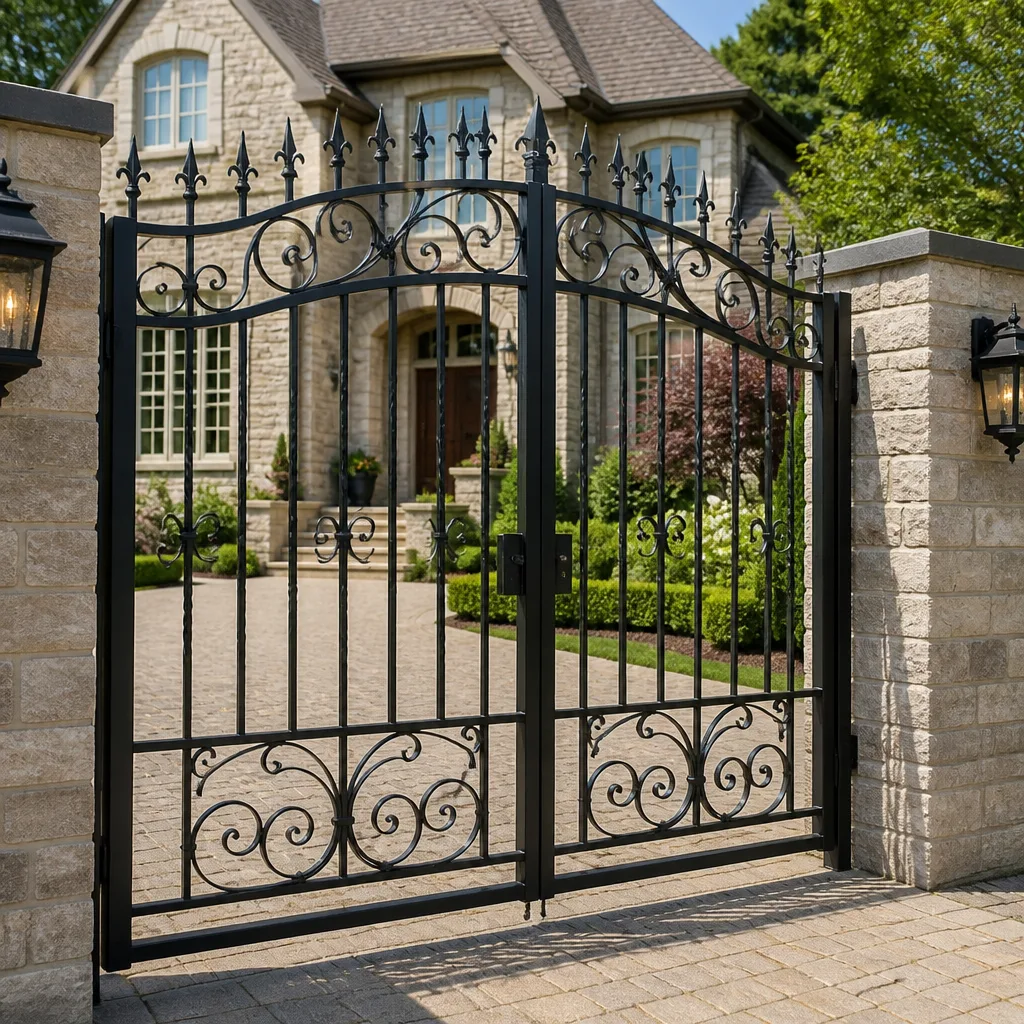 Wrought iron
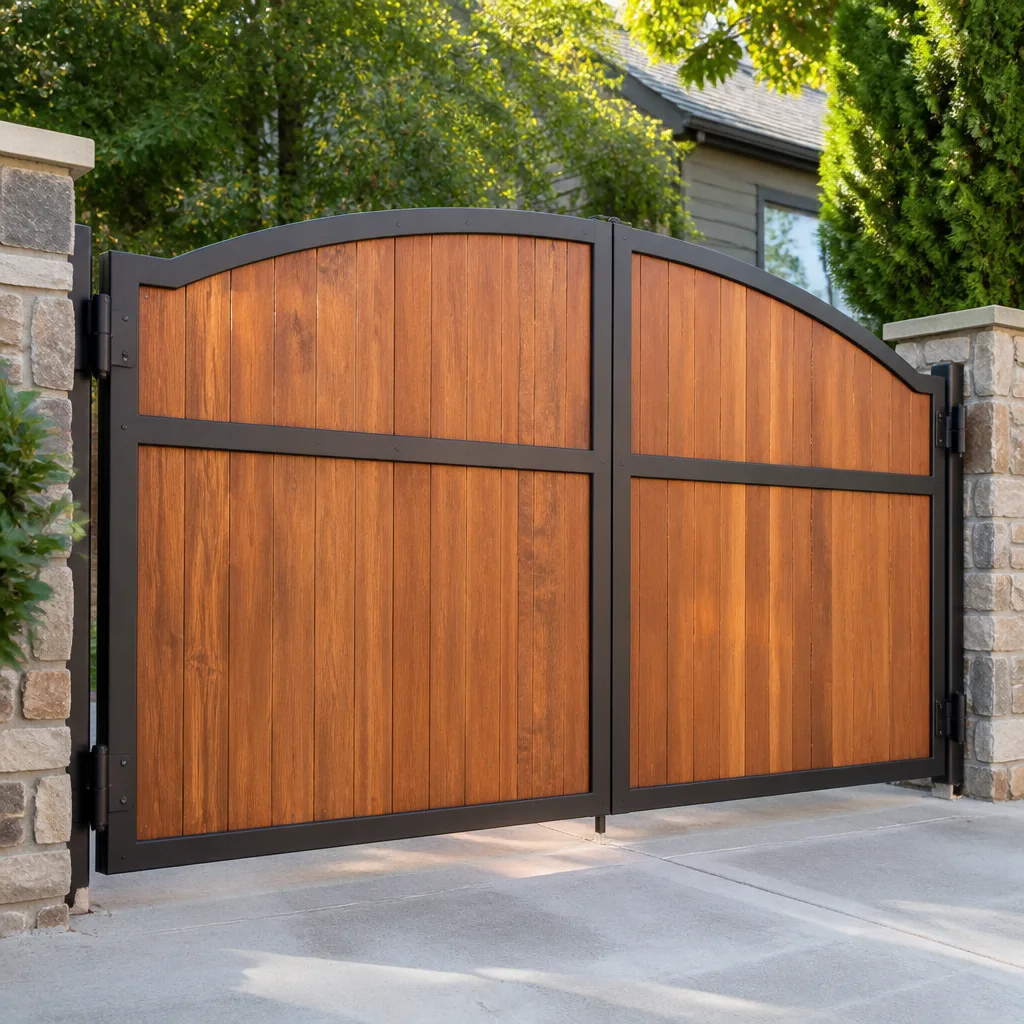 Wood & steel frame
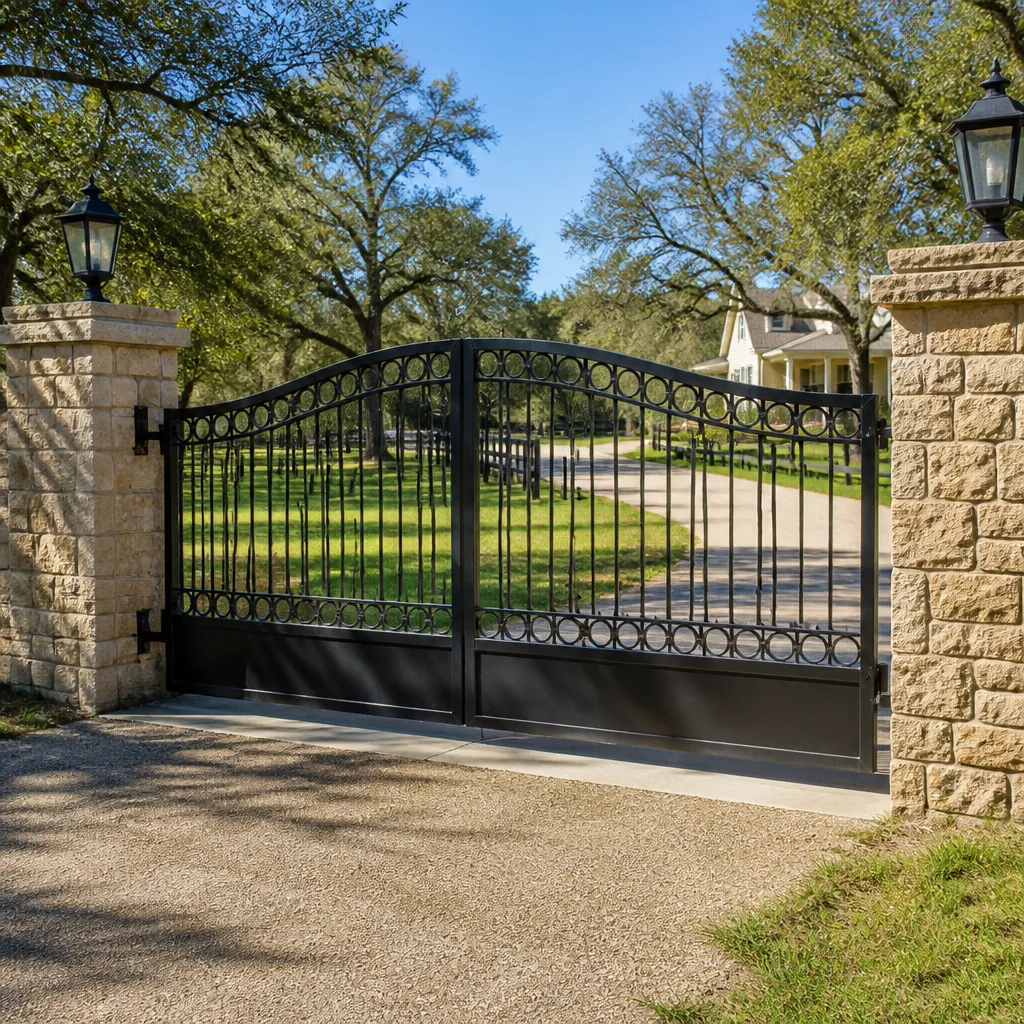 Farm & ranch
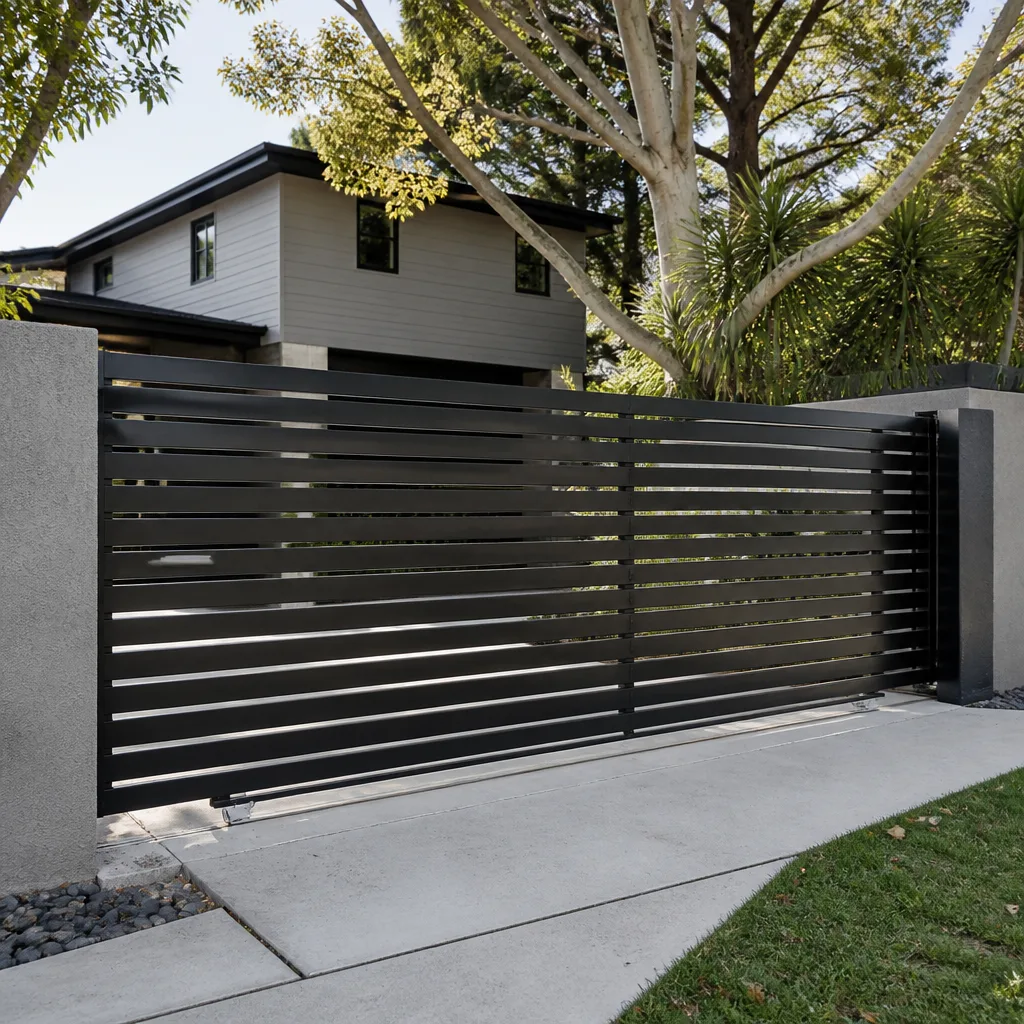 Sliding driveway gates
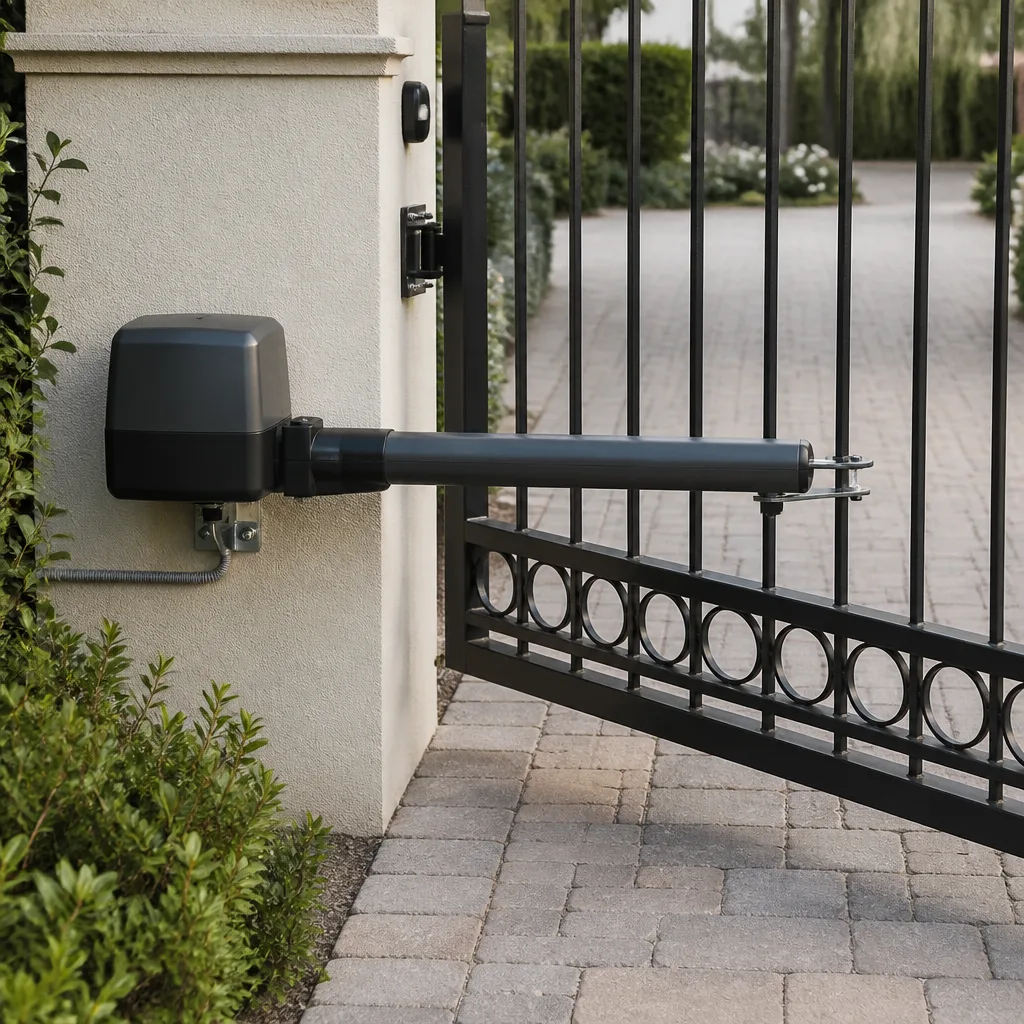 LiftMaster operators
Free on-site gate assessment - hinges, posts, and your LiftMaster or Nice gate operator checked before anything is quoted
The assessment is free and the quote is the invoice.
Get your free estimateDIY vs Professional Gate Repair: The Jacksonville Homeowner’s Decision Guide
Here’s a number most Jacksonville homeowners never hear: in our 15-plus years of gate work, roughly one in three “simple” DIY gate repair attempts ends with a call to us anyway. Not because the homeowner lacked skill. Because the real deciding factor was never talent. It was consequence. A hinge that squeaks is a Saturday project. A hinge that carries a 180-pound gate on a sagging post is a liability question. This guide walks through the actual line between DIY-safe and professional-only gate repair work, using Jacksonville’s humidity, Florida’s pool-code laws, and real parts pricing rather than vague warnings. We’ll name the specific repairs, the specific risks, and the specific dollar figures so you can decide with your eyes open.
Styles & brands we work with
Quick Answer
DIY gate repair in Jacksonville is safe and sensible for lubrication, minor hardware tightening, and cosmetic work like sanding and staining. Professional repair is the right call for anything involving gate springs, post setting, electric operators, or pool barrier compliance. The line isn’t skill. It’s whether the failure consequence is a squeak or a hospital visit. If the repair involves tension, concrete, line voltage, or a code-mandated safety feature, hire someone who does it daily.
Table of Contents
- The Real Question: Skill vs Consequence
- DIY-Safe Gate Repairs: What You Can Do This Weekend
- DIY-Risky Repairs: Where Consequences Get Serious
- Professional-Only Repairs: The Hard Line
- The Tool Cost Reality: When DIY Isn’t Cheaper in Jacksonville
- Florida Pool Barrier Law: The Liability Most Guides Skip
- Jacksonville Humidity: Why “Fixed” Gates Fail Again by September
- What to Ask For After a Professional Repair
- Common Mistakes to Avoid
- When to Call a Professional
- Frequently Asked Questions
- The Bottom Line
The Real Question: Skill vs Consequence
Every gate repair guide online frames the DIY decision around how handy you are. That framing misses what actually matters. A homeowner who rebuilt a deck can still underestimate a torsion spring. A homeowner who has never held a drill can safely lubricate a Viking operator rail. The skill required for most gate repairs is modest. The stakes are what separate the categories.
Here’s how we think about it after years of gate repair in Jacksonville. Every gate repair falls into one of three buckets:
- DIY-safe: The worst realistic outcome of a mistake is wasted time or a part you buy twice. No tension, no electricity at the panel, no concrete, no safety code involvement.
- DIY-risky: A mistake won’t necessarily hurt anyone, but it can damage the gate beyond simple repair, void a warranty, or create a hazard that builds slowly. Consequences range from an extra $200 in parts to a gate that falls off its track in six months.
- Professional-only: The failure mode is immediate and serious. Injury to a person or pet. Property damage. Code violation with legal exposure. For these, the math isn’t about saving $150. It’s about what happens if the repair fails.
Jacksonville’s specific conditions push more repairs into that third category than homeowners expect. Salt air in Atlantic Beach corrodes hardware faster than inland neighborhoods like Mandarin. Clay-heavy soil in the Westside shifts posts that looked solid in the dry season. And Florida’s pool barrier code applies to every single residential gate that encloses a pool area, no matter which neighborhood it’s in.
The rest of this guide-along with our Gate Repair Maintenance Checklist for Jacksonville Homeowners-breaks down specific repairs into these buckets with named consequences. Not “you might get hurt” generalities. Actual failure modes: what breaks, how it breaks, and what it costs when it does.
DIY-Safe Gate Repairs: What You Can Do This Weekend
Some gate work is genuinely home-turf. These repairs don’t involve stored tension, concrete, or electrical current, and a mistake means you redo the work, not replace the gate. We’ll be specific about which parts and what tools.
Lubrication and Cleaning
This is the most overlooked maintenance task and the easiest DIY win. Gate hinges, latch mechanisms, and operator chains all need lubrication a few times a year in Jacksonville. Our humidity means metal parts rust faster than they do in dry climates, and the salt air near the beaches accelerates it further. A can of white lithium grease costs around $8 at any Jacksonville hardware store. Spray the hinge pins, the latch tongue, and the area where the latch meets the strike plate. Wipe away excess with a rag. Done. Fifteen minutes.
For operator chains, a light machine oil works better than grease, which picks up sand and grit. If you have a Ghost Controls or Elite opener, the manual has a lubrication schedule. Follow it. Lubrication is never a professional-only task.
Tightening Loose Hardware
Gates cycle thousands of times a year, and every cycle vibrates the hardware slightly looser. A Phillips screwdriver and a set of wrenches handle most of this. Check hinge screws, latch plate screws, and post brackets. If a screw spins without tightening, the hole is stripped, and that’s where this crosses from DIY-safe to DIY-risky, because the fix usually involves replacing the screw with a larger one, inserting a dowel or anchor, or recognizing that the post itself is compromised.
Tightening is DIY. Repairing stripped threads in a load-bearing location requires judgment about whether the underlying material can still hold.
Cosmetic Work
Sanding and repainting a wooden gate, re-staining, replacing decorative caps on posts. All DIY-safe. One Jacksonville note: if you’re painting exterior wood, check the forecast. Paint and stain need dry conditions to cure properly. A week of afternoon thunderstorms, standard in any Jacksonville summer, will ruin a fresh stain faster than you can cover the gate. Plan cosmetic work for a dry stretch in fall or spring, not July. We see more paint-related callbacks than paint-related successes during wet season.
Replacing a Latch Handle (Non-Locking, Non-Security)
A basic gravity latch or spring-loaded handle on an interior yard gate is a straightforward replacement. The part costs $12 to $25 at a hardware store. Two screws, a screwdriver, fifteen minutes. The caveat: this applies to gates that don’t secure a pool and don’t use a keypad or electronic lock. Once the latch is part of a security system or a pool barrier, it moves out of this category.
DIY-Risky Repairs: Where Consequences Get Serious
These repairs look approachable. They aren’t. The defining feature of this category is that the failure isn’t immediate. The gate still works after the repair, so you assume you fixed it. Then the slow failure starts: a post leaning a fraction of a degree every week, a weld fatiguing, a spring losing tension a quarter-inch at a time. By the time the gate fails visibly, it may also fail catastrophically.
Replacing Gate Hinges on a Load-Bearing Post
Hinges look simple. Two plates, pins, screws. But a gate hinge carries the entire weight of the gate every time it opens and closes. On a standard 14-foot driveway gate, that weight can exceed 200 pounds. The installation requires getting the hinge placement exactly right so the gate hangs square. It also requires the post itself to be sound. Many Jacksonville homes have posts set directly into soil, and after a decade of wet summers, the wood or metal below grade may be compromised. You can bolt a new hinge to a failing post and the gate will work perfectly, for about three months. Then the post gives way and the gate drops.
If the existing hinge shows rust or the post moves when you push the gate hard, the problem isn’t the hinge. It’s what the hinge is attached to.
Adjusting Auto-Reverse Sensitivity on an Operator
This is the repair we get called about most often after a DIY attempt. Auto-reverse is the safety feature that stops and reverses the gate when it encounters resistance. It protects children, pets, and anyone standing in the gate’s path. Adjusting the sensitivity requires a specific procedure matched to the operator model. A Viking operator calibrates differently than a DoorKing. Set the sensitivity too high and the gate reverses constantly for no reason. Set it too low and the gate won’t reverse when it meets an obstacle. That second failure is how a gate becomes a crushing hazard. A mis-calibrated auto-reverse can injure a child or pet and void a warranty on a $400 to $1,500 operator in the same motion.
This is a calibration task, not a mechanical repair. It requires understanding the operator’s specific logic and testing the pressure threshold correctly. The manufacturer’s manual tells you to call a factory-trained technician for a reason.
Replacing Gate Springs on a Wooden Gate
Gates that self-close use either a spring hinge or an external tension spring. These springs are under constant load. Removing one without releasing the tension first turns the spring into a projectile. The damage is usually to the gate itself or to whatever is in the spring’s path, which makes this DIY-risky rather than the higher-stakes category below. But the spring can also snap during installation and strike a hand or face. We recommend eye protection at minimum, and honestly, we recommend a professional for any work involving a spring under load.
This category also includes replacing the chain on a chain-drive operator. The chain is tensioned around sprockets, and getting the tension wrong causes the chain to jump teeth or bind. The operator will eventually strip a plastic gear, which is a $150 to $250 part on most models.
Professional-Only Repairs: The Hard Line
Some gate repairs should never be DIY. The failure modes in this category are immediate, severe, and often permanent. These are the lines we don’t cross, and we’ll tell you exactly why.
Torsion Spring Replacement on Steel Gates
Torsion springs store massive mechanical energy. A single driveway gate torsion spring can be wound to 15,000 to 25,000 pounds of torque. When they’re properly installed, they release that energy gradually as the gate moves. When they release it all at once, a torsion spring becomes lethal. Every year, ERs treat injuries from garage door torsion springs, and gate torsion springs carry the same physics in a different package. This is not a repair where careful instructions make it safe. The winding process requires specific tools, correct technique, and the ability to control the spring bar at every point in the winding process. If the spring slips, the bar spins violently and doesn’t care what’s in its path. Professional-only, no exceptions.
Post Setting or Re-Setting
When a gate post leans or shifts, the structural integrity of the entire gate is compromised. Re-setting a post involves digging out the old footing, pouring new concrete to the correct depth, setting the post plumb, and waiting for the concrete to cure before re-hanging the gate. In Jacksonville, frost depth isn’t a concern, but soil movement is. Clay soil expands when wet and contracts when dry, and those cycles work posts loose over time. A proper post footing needs to account for the local soil’s behavior. In some Jacksonville yards, that means a deeper footing or a wider base than the national average. Get it wrong and the post leans again within a season or two. This is also one of the repairs most likely to require a permit depending on your municipality, and Jacksonville’s building department has specific requirements for gate posts adjacent to pools.
Operator Motor or Circuit Board Replacement
Electric gate operators run on either 110V line voltage or 24V control voltage, and both present hazards. A DIY motor replacement involves disconnecting the power source, properly handling the capacitor, reinstalling and remounting the motor, and re-syncing the opener’s limit settings. A circuit board replacement means matching the exact board revision to the operator model. Elite operator boards, for example, have gone through several revisions, and installing the wrong revision can damage the new board or the motor controls. Neither repair saves money when done wrong. A $45 wrong board becomes a $300 board plus a service call. Our electric gate repair in Jacksonville handles these every week, and the most common repair we see is undoing a botched board swap.
Pool Barrier Gate Compliance Work
Florida law requires residential pools to be enclosed by a barrier at least 48 inches high, with a self-closing, self-latching gate that opens outward and has specific latch placement requirements. The gate must close and latch from any open position. The latch must be placed at a height that prevents a young child from reaching it. A gate that doesn’t meet these standards is not just a convenience problem. It’s a legal liability. If a neighborhood child enters your pool area through a non-compliant gate and is injured, the homeowner’s exposure is significant. This law applies whether the pool was built last year or in 1985. Any repair to a pool barrier gate must preserve code compliance, and that’s not something a YouTube tutorial will guide you through correctly for your specific Jacksonville property. Pool barrier work is the definition of professional-only.
The Tool Cost Reality: When DIY Isn’t Cheaper in Jacksonville
The DIY calculation most homeowners make is: parts cost X, professional costs Y, therefore DIY saves Y minus X. That math ignores tools. Tools aren’t free unless you already own them, and most gate repair tools aren’t one-time purchases you’ll use weekly around the house.
Let’s run the numbers on a single hinge replacement, one of the most common gate repairs in Jacksonville:
- Replacement hinge: $12-$25 at Jacksonville hardware stores
- Appropriate wrenches or sockets: $25-$45 if you don’t have the right sizes
- Level to ensure proper hanging: $10-$20
- Wood shims and a pry bar for temporary support: $15-$25
- New screws in the correct size and material: $8-$15
Total parts: $18 on the low end. Total with tools if you’re starting from zero: roughly $70 to $110. A professional hinge replacement in Jacksonville typically runs $120 to $180. If you already own the tools, DIY saves you around $100 to $150. If you don’t, the savings shrink to $10 to $60. And that’s before accounting for an hour or two of your Saturday, plus the risk that you’ll mount the hinge slightly off-square and have to redo the work.
For one-time repairs, DIY often isn’t the money-saver it appears to be. The math changes if you anticipate doing repeated gate work, and for that, the documentation section below explains how to turn a professional repair into a long-term self-sufficiency tool.
Florida Pool Barrier Law: The Liability Most Guides Skip
Almost no DIY guide talks about this, and it’s the single most important Jacksonville-specific reason to think twice before touching a pool gate. Florida has some of the strongest residential pool safety laws in the country, and they’re codified in the Residential Swimming Pool Safety Act. The requirements are specific:
- The barrier must be at least 48 inches high from grade
- Openings in the barrier cannot allow passage of a 4-inch sphere
- The gate must open outward from the pool
- The gate must be self-closing and self-latching
- The latch release must be placed on the pool side, at a specific height, or otherwise shielded so a young child cannot reach it
What does this mean for a DIY hinge replacement on a pool gate? It means the hinge you install must preserve the self-closing function. Install the wrong hinge, or set the tension incorrectly, and the gate no longer closes by itself. That’s a code violation. You might not notice it for months, until the day a neighbor’s child pushes through an opening that should have been closed and latched.
Homeowner’s insurance policies in Florida increasingly ask about pool barrier compliance, and after any incident, non-compliance becomes a central fact. The liability exposure isn’t theoretical. It follows the property, not the person. When the house is sold, a non-compliant pool barrier becomes a disclosure problem and a negotiating point against you. Professional repair protects the barrier’s compliance function, not just its mechanical function.
Jacksonville Humidity: Why “Fixed” Gates Fail Again by September
Jacksonville’s climate is a stress test for gate materials. Summer humidity ranges from 70% to 90% daily, afternoon thunderstorms are near-daily from June through September, and the whole region sits in a salt-air zone that accelerates corrosion. Products that work fine in dryer climates fail here in one season. This matters for DIY repairs because the failure looks like your fault, even when it isn’t.
Wood filler is a good example. Standard exterior wood filler cures through solvent evaporation. In a dry climate, the solvent leaves quickly and the filler hardens properly. In Jacksonville’s humid summers, the evaporation slows or stalls. The filler stays slightly soft, absorbs water from the air, and within six to eight weeks it’s spongy. What looked like a successful repair in July is a swollen, cracked patch by September. The fix is to use humidity-tolerant epoxy filler, which is more expensive and slightly harder to work with, or to wait for a dry season window. Most national DIY guides never mention this, because most national content isn’t written from a subtropical city.
The same applies to exterior caulk around gate hardware. Standard silicone caulk skins over quickly, but the interior takes days to fully cure when the relative humidity stays above 80%. Rain during that window washes the uncured caulk out entirely. Marine-grade caulk rated for salt exposure is the correct choice here, and it’s not what the big-box store defaults to.
Gate hardware itself also corrodes faster in Jacksonville than it does anywhere inland. Galvanized steel is the baseline; stainless steel is the upgrade worth paying for. If you’re buying replacement hinges or screws for a DIY repair, buy stainless. The price difference is a few dollars now and the difference between replacing them again in three years or in twelve.
What to Ask For After a Professional Repair
Here’s a practical guide section most homeowners never receive. When you do call a professional for a gate repair, the job shouldn’t end when the technician drives off. Ask for documentation that turns that one service call into long-term maintenance you can handle yourself, or explore our more guides & resources to build your knowledge between visits. A good gate professional will provide this without hesitation. A bad one will look confused.
The Documentation Checklist
- Parts list with model numbers: Ask what was installed, the exact model number, and the manufacturer. If it’s an Elite control board or a Viking hinge, the model number lets you order a replacement yourself in three years without paying a diagnostic fee.
- Lubrication schedule and product recommendation: A good technician will tell you what lubricant to use, where to apply it, and how often. In Jacksonville, the schedule is shorter than in dryer climates. Get it in writing.
- Adjustment settings if applicable: For operator work, ask for the final force settings, limit positions, and closing speed if the model allows adjustment. These are your baseline numbers. If the gate starts drifting, you’ll know it by comparing current behavior to the documented settings.
- Post-repair care instructions: New concrete needs cure time before the gate is fully loaded. New springs need a settling period. New paint needs dry weather. Whatever applied to your repair, ask for it in one clear list.
- Warranty terms on parts and labor: Know what’s covered, for how long, and what voids it. If the professional says “lifetime warranty,” ask for the written version. The details matter.
At Latch and Post Gate Repair Jacksonville home, we leave every customer with this documentation as standard practice, because the goal of a good repair is that the homeowner shouldn’t need to call us again for the same thing. The C.A.R.E. values our technicians work under include explaining the price before the work and asking before we touch anything, and that extends to explaining what we did and how to maintain it after we leave.
Common Mistakes to Avoid
- Using WD-40 on gate hinges. WD-40 is a water displacer, not a lubricant. It cleans off old residue but leaves no lasting film. Within a month in Jacksonville’s humidity, the hinge is squeaking again and now it’s also stripped of whatever lubrication it had. Use white lithium grease or a dedicated silicone spray.
- Overtightening every bolt you touch. Gate hardware needs specific torque, not maximum torque. An overtightened hinge bolt cracks the wood around it, and now the gate has a stress fracture that grows with every cycle. Tighten until snug, then a quarter-turn more.
- Treating all gate springs as interchangeable. The spring’s tension rating must match the gate’s weight and length. A spring rated for an 8-foot gate will either slam a 12-foot gate or fail to close it entirely. Match the spec, not the silhouette.
- Painting over rust without addressing the rust. Rust is active corrosion. Paint over it and the oxidation continues underneath until the metal fails. Remove the rust first, treat the metal, then paint. In Jacksonville’s salt air near the beaches, this step is non-negotiable.
- Ignoring the gate’s relationship to the post until the gate won’t close. A gate that rubs the ground, drags at the latch, or leans visibly is telling you the post is moving. By the time it won’t close, the post has usually shifted far enough that re-hanging the gate isn’t enough. You’re now in post-repair territory, which costs three times what early intervention would have.
- Attempting operator repairs with the power still connected. Even low-voltage operators have capacitors that retain charge after the unit is unplugged. Discharge the capacitor and verify zero voltage before touching any wiring. This mistake hospitalizes a homeowner every year somewhere in Florida.
When to Call a Professional
If your gate involves a torsion spring, a leaning post, an operator motor, a circuit board, or a pool barrier, call a professional. These are the lines where a mistake stops being inconvenient and starts being dangerous or legally exposed. A gate that falls on a child, a post that fails and sends a 200-pound gate into a car, an operator that doesn’t reverse, a pool gate that doesn’t latch. None of these are “learn as you go” scenarios.
If you’re uncertain which category your repair falls into, call us. We’ll tell you straight. Some repairs we’ll recommend you do yourself, because that’s the honest answer. Latch and Post Gate Repair Jacksonville offers free estimates in Jacksonville. Call (904) 250-0188 and you’ll talk to a live person who can help you think through the decision.
Frequently Asked Questions
Most standard gate repairs in Jacksonville run between $120 and $450. Hinge replacements typically fall between $120 and $180. Operator circuit board replacements range from $250 to $450. Post re-setting starts around $300 and goes up depending on the size of the gate and the footing work required. Every Latch and Post visit includes a written price before any work starts, so the number you see is the number you pay. Call (904) 250-0188 for an exact quote. Estimates are free.
For urgent gate failures, we answer the phone around the clock and schedule emergency repairs every day of the week. A gate that won’t close, especially a pool gate or a driveway gate securing a property, is a safety issue, not an inconvenience. Call (904) 250-0188 and a live person will get you on the schedule.
Most gate repairs don’t require a permit, but post re-setting and any repair that affects a pool barrier can trigger permit requirements depending on your location and the scope of work. When you work with a professional who knows Jacksonville’s building regulations, the permit process is handled for you when it applies.
We’re factory-trained on the brands Jacksonville homeowners actually have installed: LiftMaster, FAAC, BFT, Linear, Viking, Ghost Controls, DoorKing, Elite, and Mighty Mule. That covers nearly every operator you’ll find on Jacksonville properties, from older Viking units in Ortega to newer Ghost Controls systems in Nocatee.
Most hinge, latch, and hardware repairs take 45 to 90 minutes. Operator board replacements take about an hour. Post re-setting takes longer because the concrete needs cure time before the gate can be re-hung, usually one to two days total between digging, pouring, and the final reinstallation. We’ll give you a clear time estimate with the written price before any work begins.
Yes, and we’ll show you how. After every repair or gate installation in Jacksonville, we leave documentation covering what was installed, what to lubricate and when, what the correct adjustments are, and what to watch for before calling us again. The goal is that you understand your gate well enough to handle the simple stuff and recognize the warning signs of the complex stuff.
The Bottom Line
The DIY vs professional decision for Jacksonville gate repair isn’t about how capable you are. It’s about what breaks if you’re wrong. Lubrication, tightening, painting, and basic latch swaps are homeowner work. Hinges, springs, posts, operators, and pool-barrier compliance carry consequences that make professional repair the rational choice. Jacksonville’s humidity shortens the life of DIY repairs that would work fine elsewhere, and Florida’s pool code adds legal exposure that most national guides never mention. The smart approach is honest triage: identify the repair category, check the real tool and parts math, and call in a pro when the downside is bigger than the savings. For free estimates and straight answers, call Latch and Post Gate Repair Jacksonville at (904) 250-0188.
Written by Cody Beckman, Owner at Latch and Post Gate Repair Jacksonville, serving Jacksonville since 2009.
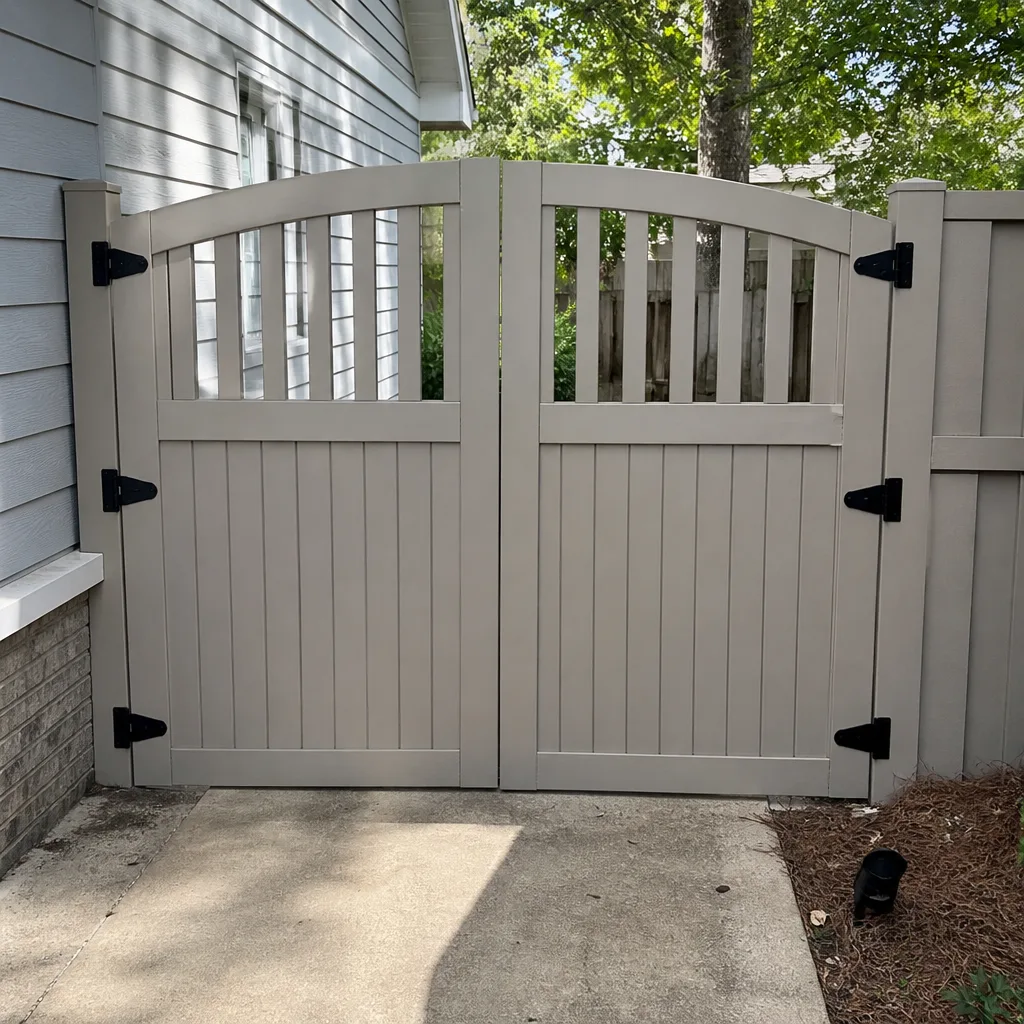
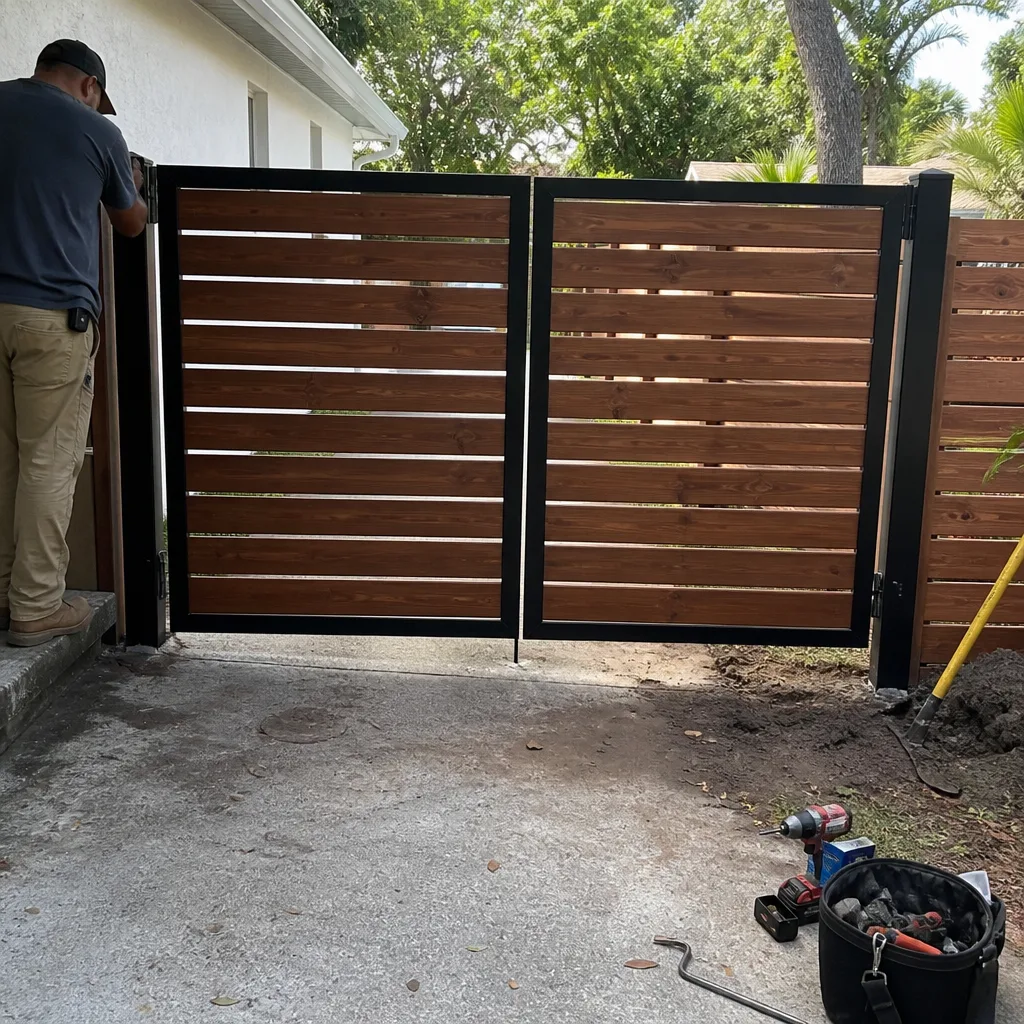
See the difference
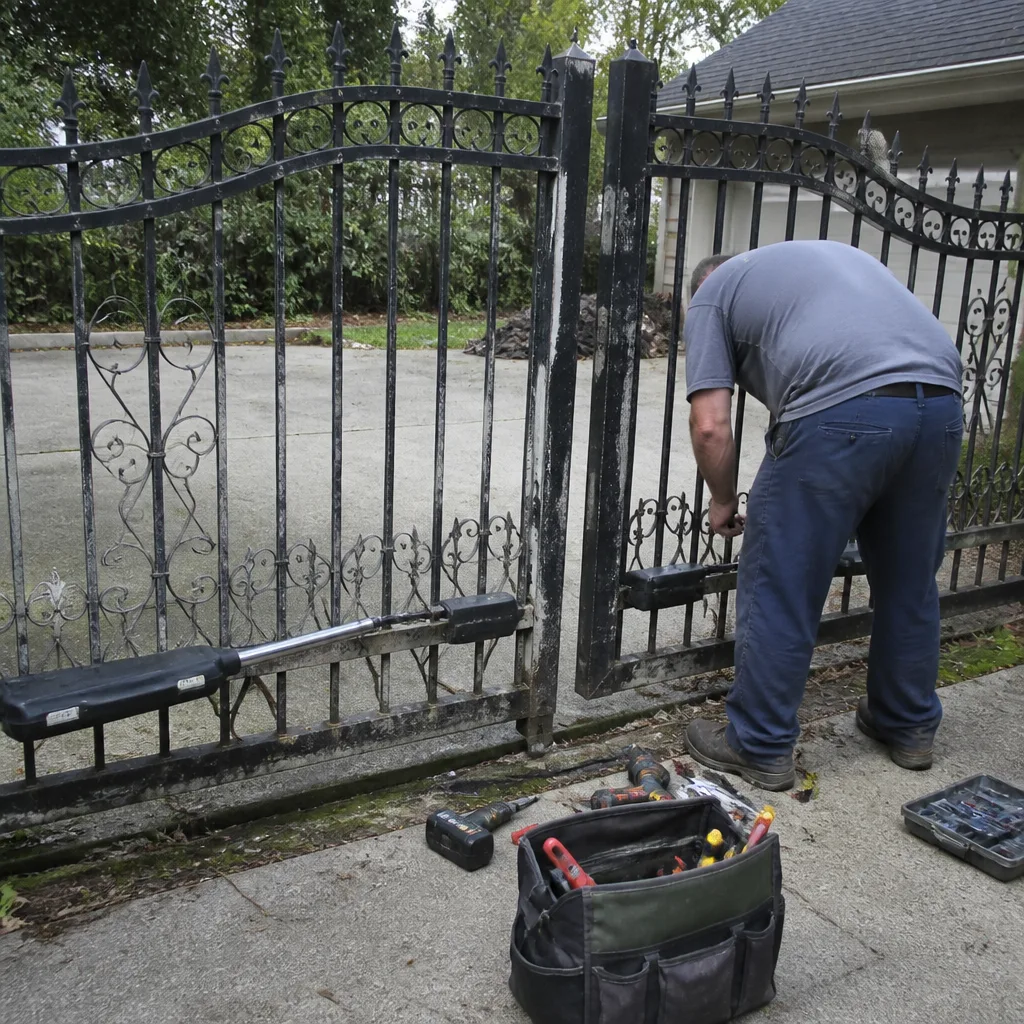 Before
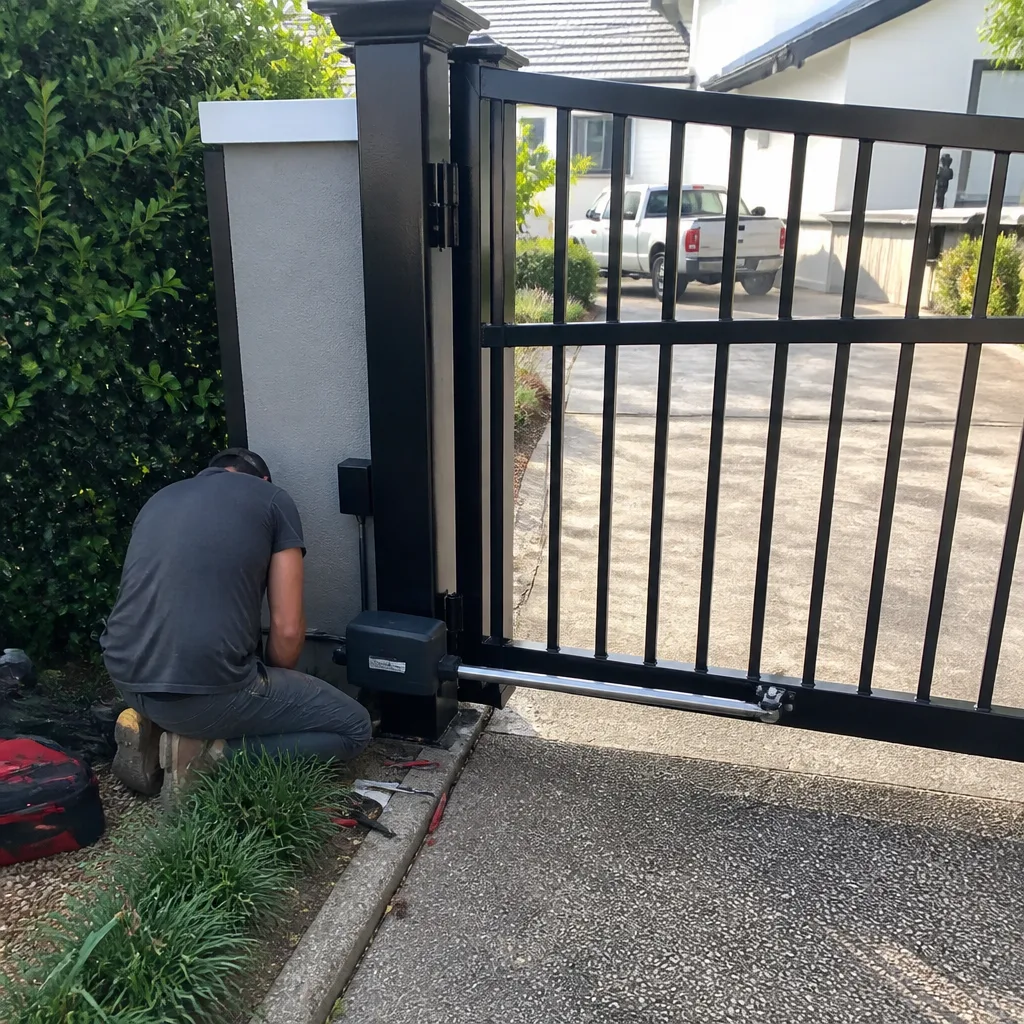 After
After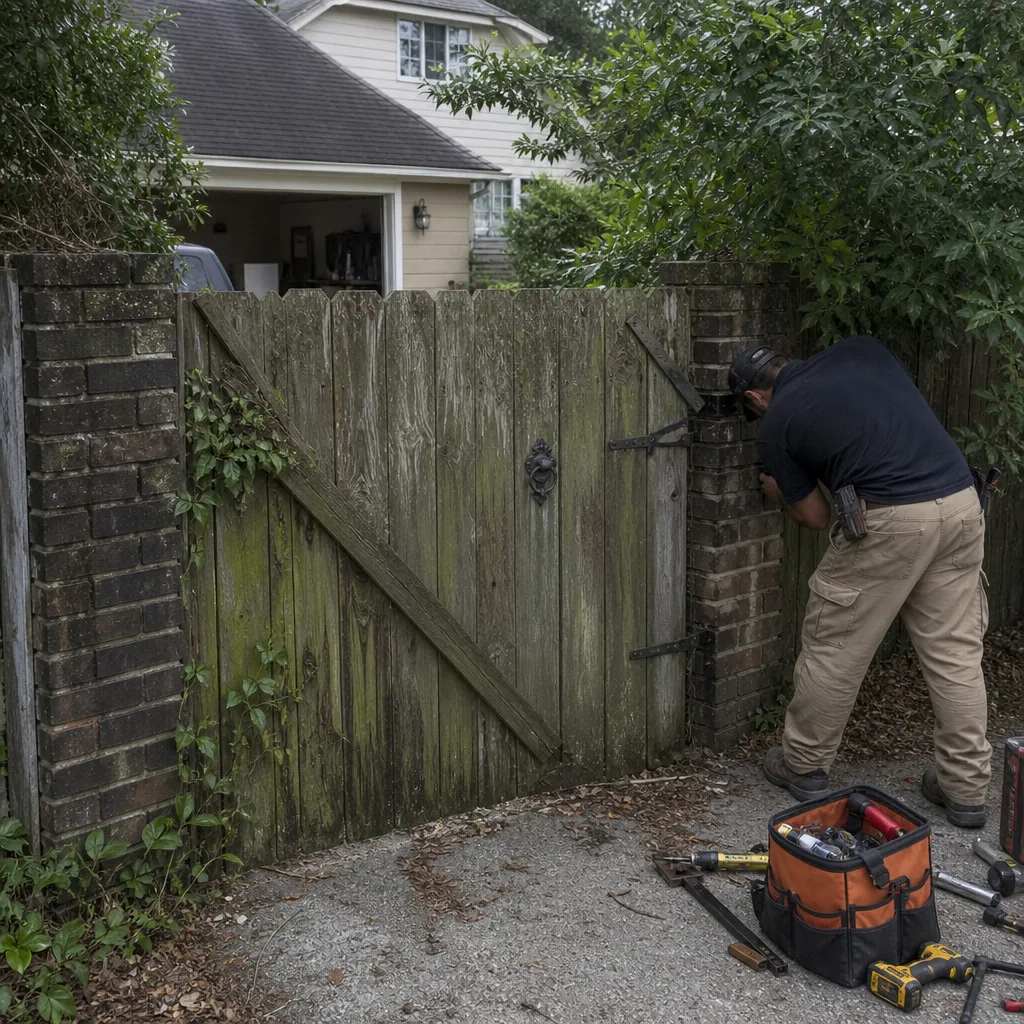 Before
 After
After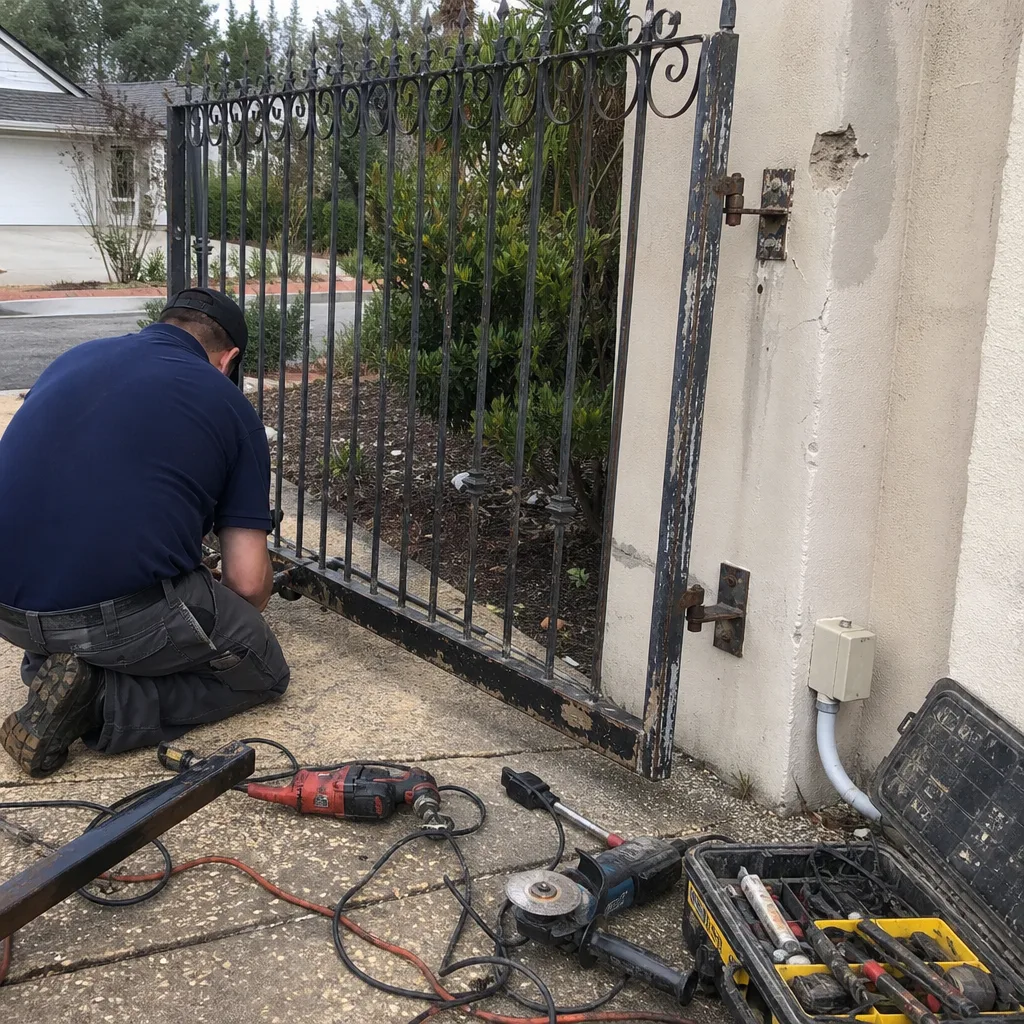 Before
 After
After