
Last updated October 17, 2026
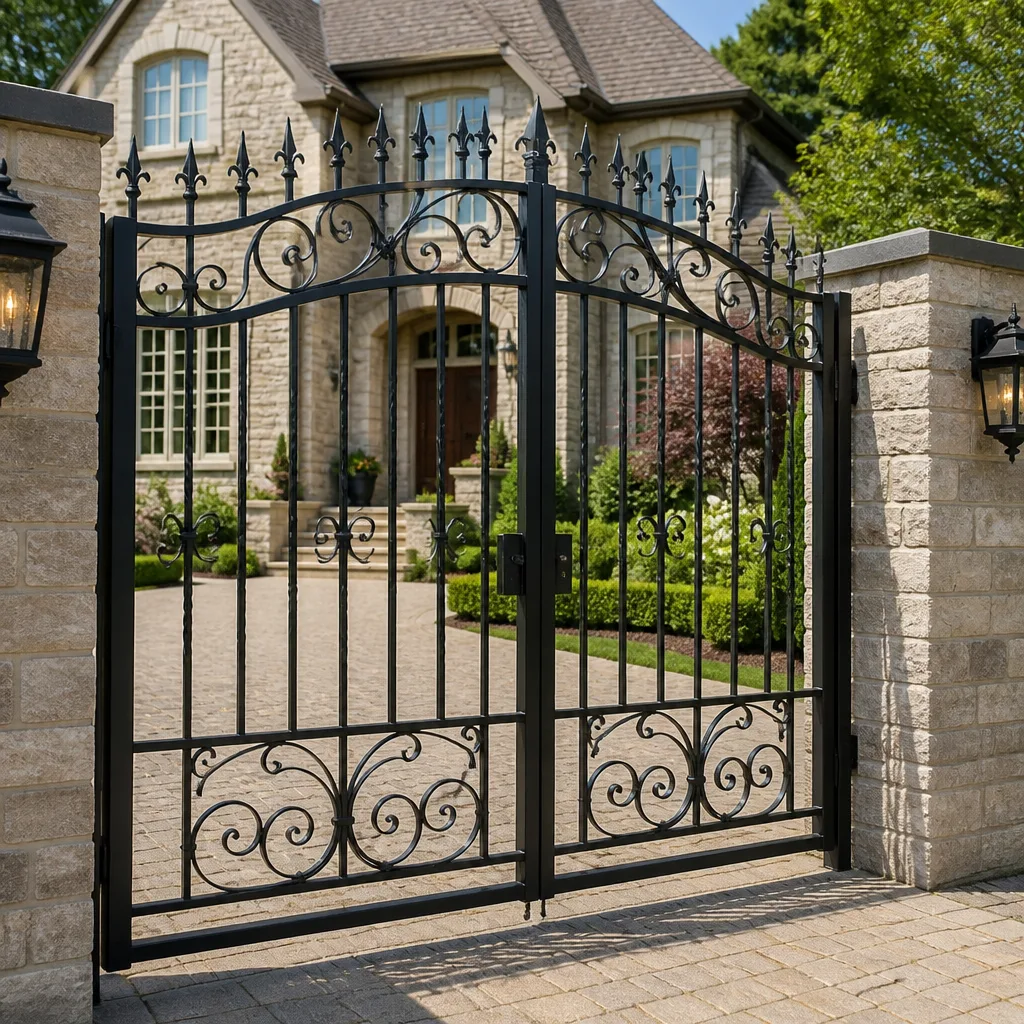 Wrought iron
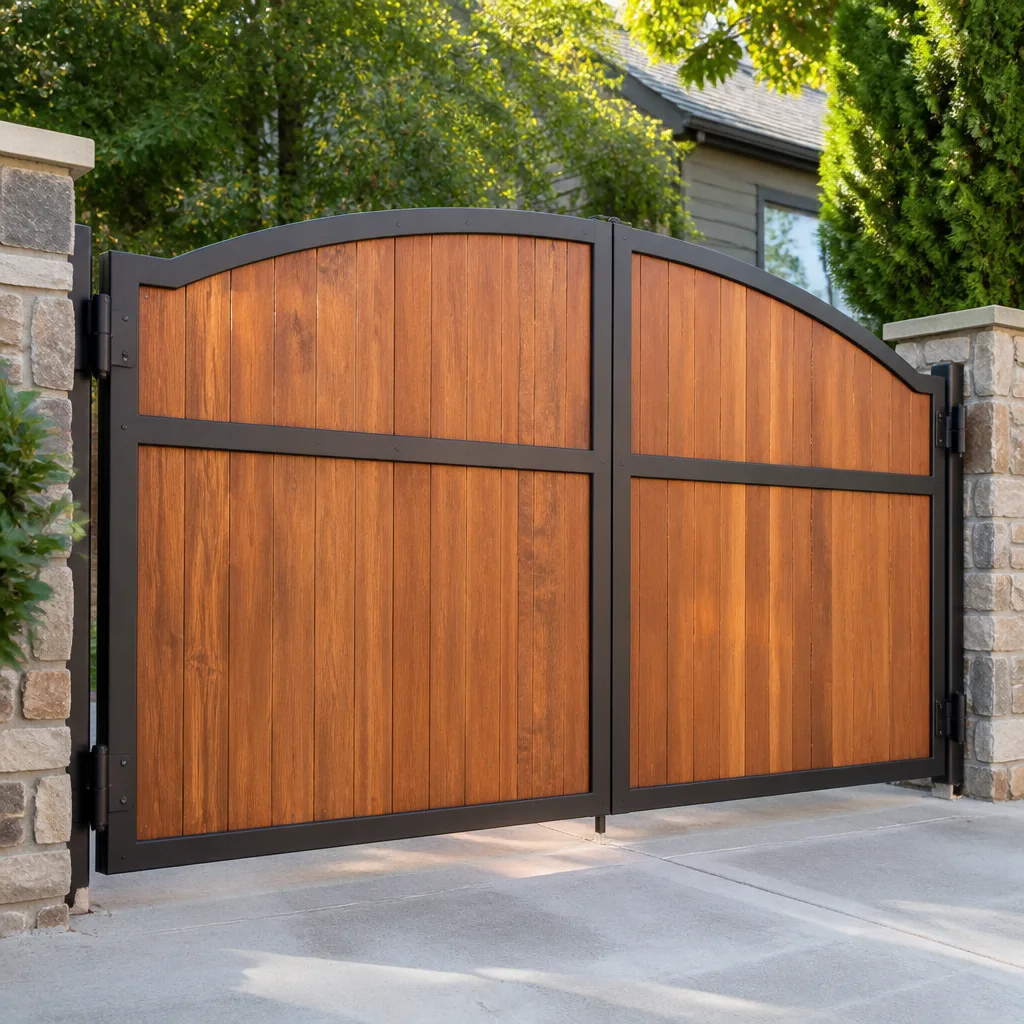 Wood & steel frame
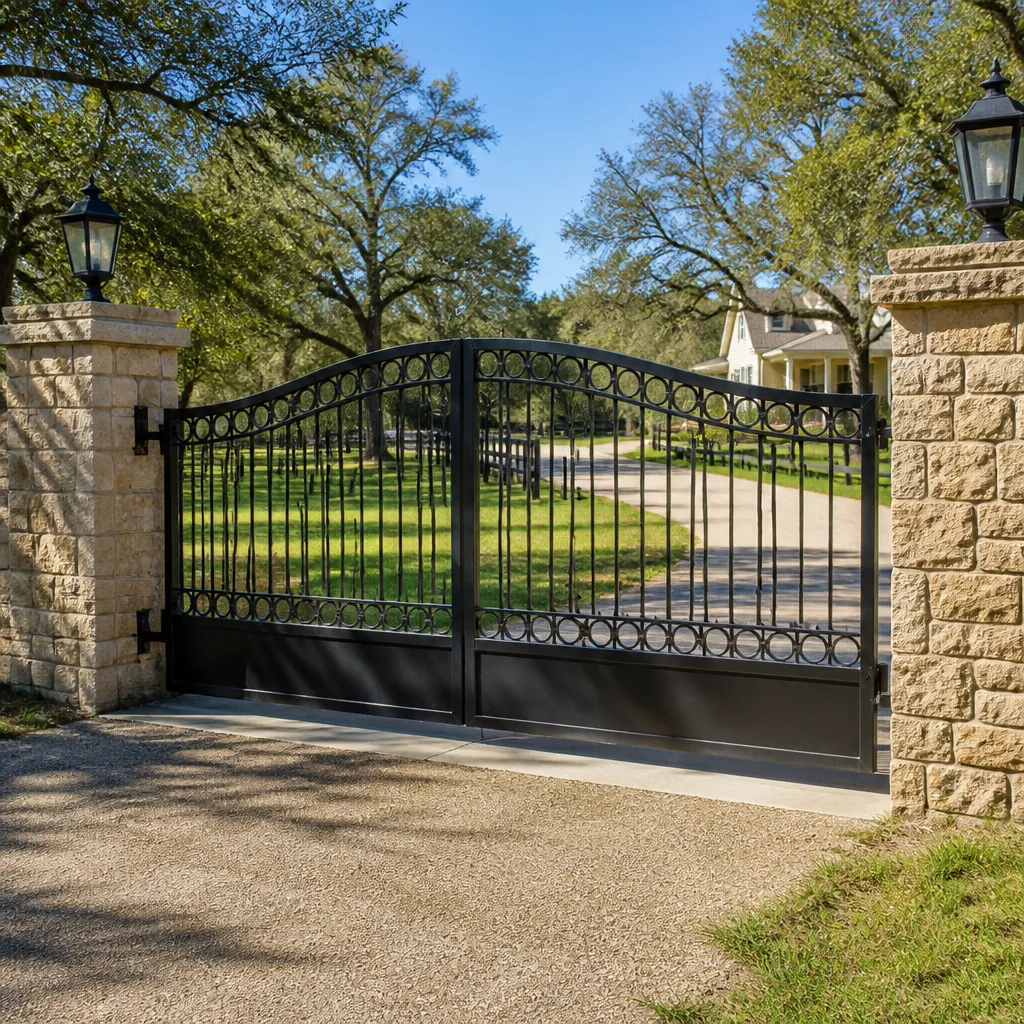 Farm & ranch
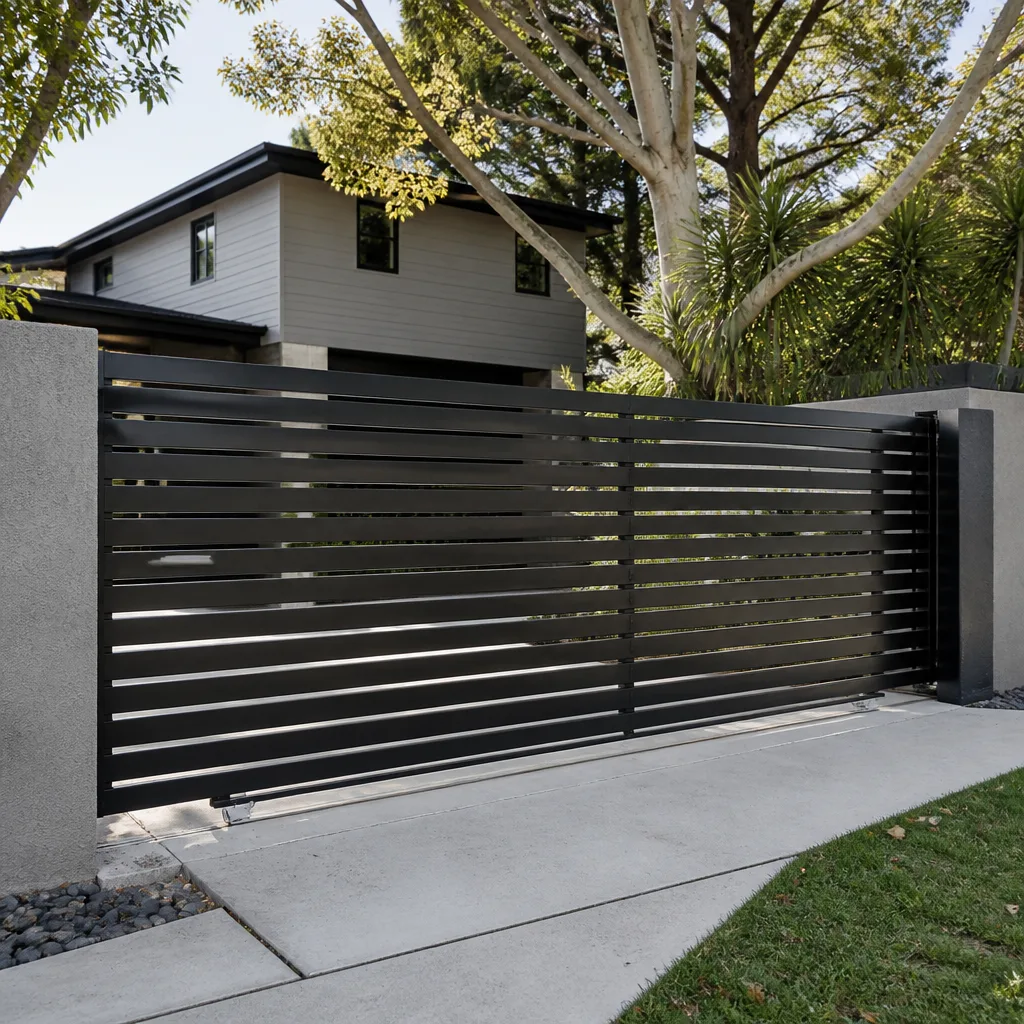 Sliding driveway gates
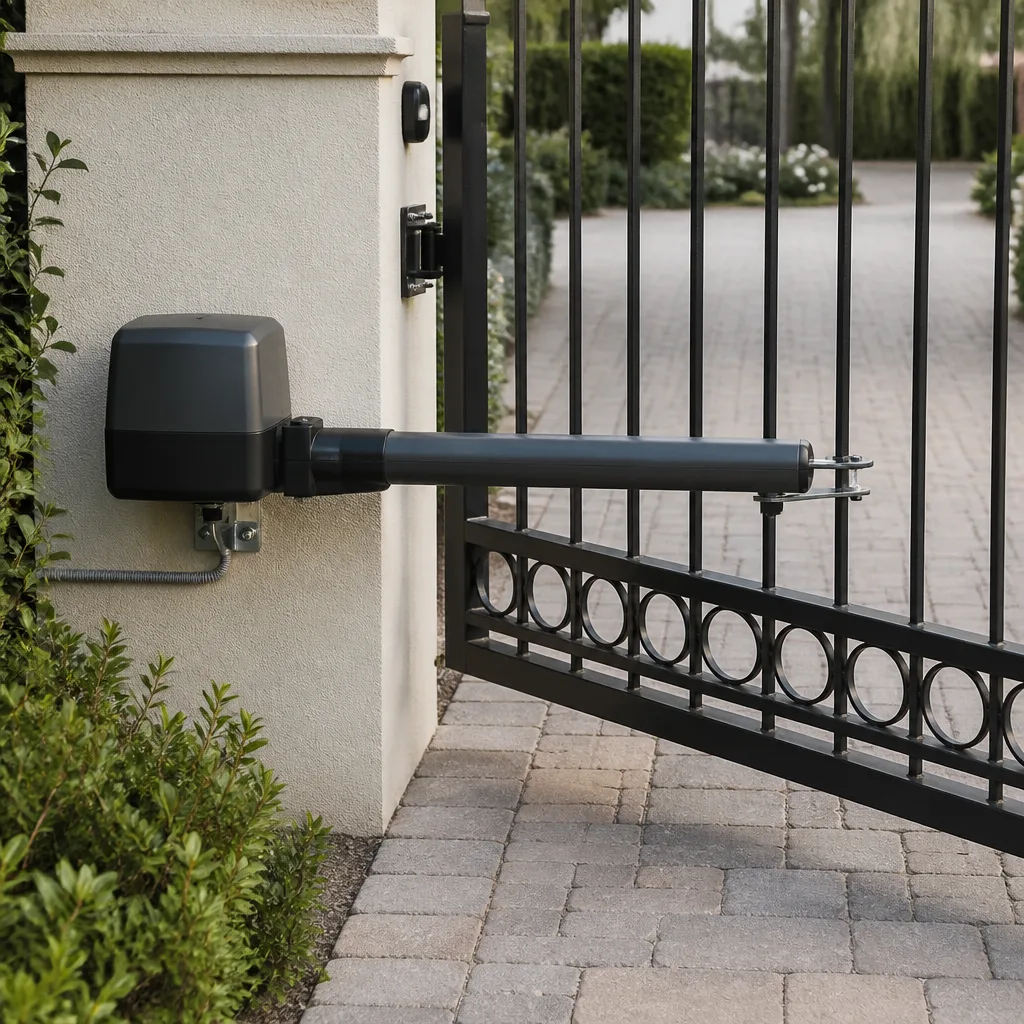 LiftMaster operators
Free on-site gate assessment - hinges, posts, and your LiftMaster or Nice gate operator checked before anything is quoted
The assessment is free and the quote is the invoice.
Get your free estimateGate Repair Warning Signs: A Jacksonville Homeowner’s Reference Guide
A gate that takes two lifts to latch isn’t slightly broken, it’s communicating something specific. That extra shove you give it every morning is a post-lean measurement, and it predicts whether your repair lands around $90 for a latch adjustment or $600 for a post reset and hinge rebuild, depending on when you act. Most Jacksonville homeowners read these signs as quirks. They’re not quirks. They’re early indicators of a failure that’s usually three to six months out, and the window for the cheap fix is open right now. This guide walks you through what your gate is trying to tell you, the specific sounds and movements that map to specific components, and the self-tests you can do tonight with nothing but your eyes and hands. For professional help, see our Gate Repair services.
Styles & brands we work with
Quick Answer
The earliest warning signs of gate failure in Jacksonville are a latch that needs a second push, a gate that drags or scrapes in the last foot of swing, new sounds (grinding, clicking, humming, or squealing), visible rust bleed at hinges or welds, and a gate that sits visibly out of level. Each of these maps to a specific component: latch alignment, hinge wear, post lean, opener gear stress, or corrosion. Caught early, most of these are sub-$200 fixes. Ignored for six months, they become post resets, weld repairs, or full opener replacements costing $400 to $900 or more.
Table of Contents
- The Sound Guide: What Your Gate Is Saying in Wood, Iron, and Automation
- Visual Signs Jacksonville Homeowners Miss: Rust, Bleed, and Post Lean
- The Hidden Cost: How a Misaligned Gate Stresses Your Fence and Opener
- The Pet and Child Safety Threshold: Inches and Seconds That Matter
- Five Self-Tests You Can Do Without Tools
- What Jacksonville’s Climate Does to Gates That Other Guides Ignore
- What Repairs Actually Cost in Jacksonville
- Common Mistakes to Avoid
- When to Call a Professional
- Frequently Asked Questions
- The Bottom Line
The Sound Guide: What Your Gate Is Saying in Wood, Iron, and Automation
Gates don’t make random noise. Every sound is a component under friction, and the sound itself tells you what’s failing. In our experience across Jacksonville, from Arlington to Mandarin to the beaches, the same five sounds show up over and over. Here’s the map.
Grinding in a wooden gate almost always means the hinge screws have pulled loose enough that the hinge leaf is rubbing against itself. The sound is low and rough, and you’ll hear it most in the middle of the swing. In an iron gate, grinding is usually hinge-pin wear, the pin has gone dry and the steel is eating itself. In an automated gate, grinding from the opener means the gear teeth are stripping, and every swing is doing permanent damage to the gearbox. A LiftMaster or DoorKing opener that grinds on every cycle is not going to heal itself.
Clicking tells a different story. In a wooden gate, clicking usually means a hinge screw has backed out and the hinge is shifting as the gate moves through its arc. In an iron gate, it’s often a loose weld or a gate that’s hitting the stop or post at the end of travel. In an automated system, a rapid click from the opener when you press the remote usually points to the control board relay or a low-voltage short in the keypad wiring. One click is a relay doing its job. A chatter of clicks is not.
Squealing is friction on ungreased metal. In manual iron gates, it’s hinge pins screaming for lubrication, and it’s the easiest fix on this list if caught before the pin wears oval. In automated gates, squealing from the opener motor is worse: it usually means the drive belt or chain has lost tension and is slipping on the sprocket. Every squeal cycle is shaving life off the belt.
Humming is exclusively an electric gate symptom. A gate that hums but does not move means the motor is receiving power and trying to turn, but something is stopping the mechanism. Most of the time in Jacksonville, that something is a seized bearing in the opener arm or a capacitor that has gone bad. A Mighty Mule or Ghost Controls opener that hums for three seconds and then trips its breaker is telling you the capacitor is dead. That’s a standard repair we handle on the first visit.
Scraping against the driveway or concrete pad is not a sound you should hear at all. It means the gate has dropped on its hinges, which means the post has leaned or the hinges have compressed. In Jacksonville’s sandy soil, post lean is the single most common cause. We’ll get into the self-test for this below.
Visual Signs Jacksonville Homeowners Miss: Rust, Bleed, and Post Lean
You can diagnose half of Jacksonville gate problems from ten feet away without touching anything. The trick is knowing what to look at, and most people look at the wrong thing. They look at the gate. You need to look at the post, the hinges, and the bottom two inches of the gate.
Rust bleed versus through-corrosion. Rust bleed looks like faint orange streaks running down from a hinge, a weld, or a bolt. It stains the gate face below the hardware. From ten feet away, it looks like the gate is rusting, and if you’re buying a home or making a repair decision based on that look alone, you’ll misread the problem. Rust bleed means surface oxidation at the hardware point. The fix is usually cleaning, treatment, and a quality hardware replacement if the hinge has lost its coating. Through-corrosion is different. It looks like flaking, pitting, or a hole starting to form. If you can press a screwdriver tip into the metal and it craters, that’s structural. That gate section or that post needs replacement, not patch work. Jacksonville’s humidity and salt air, especially east of the Intracoastal in Atlantic Beach, Neptune Beach, and the coastal edges of Ponte Vedra, accelerates this by years compared to inland properties in Mandarin or the Westside.
Post lean. The post is the most important part of any gate. If it’s leaning, the gate will never hang right, no matter how many times you adjust the latch. The Jacksonville-specific culprit is sandy soil. It drains fast, which is good for lawns, but it gives posts less lateral support than the clay-heavy soil you find further north. When a post leans even two or three degrees, the gate drops, the latch misses, and every cycle stresses the hinges unevenly.
Gate gap at the latch. Stand back and look at the gap between the latch and the strike plate, or between the gate and the post where it closes. A gap that was once hairline and is now a half inch is not cosmetic. It’s a structural shift that’s already happened. The question is whether it’s still moving. If the gap changes with the season, that’s wood or soil moisture cycles. If it changes week to week, that’s a failing post or hinge and it’s moving faster than you think.
The Hidden Cost: How a Misaligned Gate Stresses Your Fence and Opener
Here’s the part most guides skip, and it’s the reason a $90 gate repair becomes a $1,500 fence repair if you wait. For Seasonal Gate Repair Care for Jacksonville: Year-Round Homeowner’s Guide, see our seasonal maintenance tips.
A dragging gate does not exist in isolation. Every time your gate scrapes the ground, it’s pulling on the post. The post pulls on the fence rail. The fence rail pulls on the adjacent posts. In wood fencing, that’s loosened nails and popped pickets over two or three fence sections on either side of the gate. In vinyl, it’s popped rails and cracked post collars. In chain link, it’s stretched mesh and a leaning top rail. We’ve been called to Jacksonville homes where the gate itself was a $150 hinge fix, but the fence repair on either side cost the homeowner $1,200 because the problem had been dragging for a year. The gate was the cheap part. The fence was the expensive consequence.
Electric gates have their own hidden cost. An automated gate with worn gears or a dragging leaf doesn’t just wear the gears out faster. It pulls excess current through the motor every cycle. That excess current is heat. That heat degrades the motor windings and the control board over time, shortening the opener’s life from a normal 12 to 15 years down to 5 or 6. A gate opener is a significant investment, and a LiftMaster or Elite unit run against a binding gate is an investment being burned down a little at a time.
The interaction also works the other way. A properly aligned gate puts almost no load on the fence. Fix the gate early, and the fence lasts its full life. This is why we tell Jacksonville homeowners that the gate is the highest-leverage component on the entire fence line, and that’s not an exaggeration. It’s where all the force concentrates.
The Pet and Child Safety Threshold: Inches and Seconds That Matter
Most parents and dog owners in Jacksonville think a gate is either open or closed. They miss the middle zone, and the middle zone is where the real risk lives.
A latch gap of two inches or more at the gate post is a pass-through hazard for a cat, a small dog, or a determined toddler. You don’t need a fully open gate. You need enough of a gap that a child’s head or a dog’s shoulders can get through. A two-inch gap at the latch translates to four or five inches of gate travel at the far end, which is more than enough for a small Jack Russell or a two-year-old who has decided the front yard looks interesting. The threshold we give Jacksonville homeowners is this: if a soda can fits through the gap at the latch, the gate is no longer a barrier for a small pet or a determined child. A soda can is 2.6 inches wide. That’s the test.
For automated gates, the risk is not a gap. It’s lag time. A gate that takes two extra seconds to start opening after you press the remote, or that opens halfway and pauses before continuing, has a failing capacitor, a binding mechanical component, or a control board issue. Those extra seconds are not an inconvenience. They’re a gap between the moment you think the gate is safe and the moment it actually is. A dog who has learned to rush the gate will beat a lagging opener. A child who runs ahead toward the driveway will too. When an opener develops lag, the safety sensors and auto-reverse on a Gate King or Ghost Controls unit may still work on paper, but the delayed start creates a window where the gate is somewhere between closed and open without anyone clearly in control of it.
The pet and child safety threshold is concrete: two inches at the latch gap, or two seconds of opener lag. Either one means the gate should be serviced this week, not this quarter.
Five Self-Tests You Can Do Without Tools
None of these require a wrench, a level, or any mechanical skill. They take about five minutes total, and they’ll tell you more than an hour of Googling.
- The open-position hold test. Open your gate about halfway and let go. A healthy gate stays exactly where you left it. If it swings open or closed on its own, the post is leaning or the hinges are binding. That’s the most reliable early indicator of post lean we know, and it works on any gate, wood, iron, or vinyl.
- The lift test. Put your hand under the latch-side end of a closed gate and lift straight up. A healthy gate moves no more than a quarter inch vertically. If it lifts half an inch or more, the hinge pins or hinge screws are worn, and every swing is grinding away more metal.
- The latch-gap soda-can test. Latch the gate and look at the gap between the gate and the post at the latch line. If a standard soda can (2.6 inches) fits through that gap, or even gets close, the gate is no longer containing a small pet or a curious toddler. Call for a latch adjustment or a post reset.
- The sound-per-cycle test. Open and close the gate three times slowly, and listen. Three cycles will reveal a sound that you’ve been tuning out. Grinding, clicking, squealing, or scraping, each one maps to a specific fault we covered in the sound guide. If the sound is consistent cycle after cycle, it’s a component problem, not a one-off.
- The opener lag test. For automated gates only: press the remote and count the seconds between the press and the first movement. One second is normal. Two or more is lag. Watch also for a gate that pauses mid-cycle or reverses for no reason. Either one points to a capacitor, gear, or control board issue that is easier to fix now than after a full failure.
If your gate fails two or more of these tests, the problem is compounding. Two failures mean two components are already wearing each other. The good news is that most of what these tests catch is routine work for us. If you want a professional second opinion, Gate Repair in Jacksonville is what we do most days, and we’re happy to walk the property with you and show you what we’re seeing.
What Jacksonville’s Climate Does to Gates That Other Guides Ignore
Generic gate advice ignores geography, and geography matters more here than most places. Jacksonville sits in USDA hardiness zones 9a and 9b, which sounds like gardening trivia until you realize it means heat, humidity, and a long growing season, all of which are hostile to gate hardware.
Humidity is a corrosion accelerator. Our average relative humidity runs 75 percent or higher for most of the year. That’s a continuous moisture film on every uncoated steel surface, and it’s why hinges and bolts in Jacksonville rust faster than identical hardware in Atlanta or Charlotte. Salt air compounds it. Properties within two or three miles of the ocean and the Intracoastal get salt deposition on metal every single day. A galvanized hinge that might last 20 years inland in the Florida panhandle’s drier air will show rust bleed in 5 or 6 years in Atlantic Beach. If you live east of the Intracoastal, expect hinge and bolt corrosion to move about three times faster, and budget for inspection at least twice a year.
Sandy soil means post movement. Jacksonville’s soil is famously sandy, especially near the beaches and along the St. Johns River. Sand drains well, but it shifts under repeated load, and a swinging gate is repeated load against a buried post. This is why the open-position hold test matters so much here, and why post resets are the single most common structural repair we do across Jacksonville. A post set in sandy soil and backfilled with concrete that’s only 18 inches deep will move within a few years. The fix is a deeper footing with proper drainage, and that’s a job worth doing right the first time.
Afternoon thunderstorms and electrical components. Automated gates in Jacksonville live through some of the highest lightning frequency in the country. Northeast Florida sees more than 80 thunderstorm days a year. A nearby strike doesn’t have to hit your gate to kill it. Voltage induction through the control wiring is enough to fry a control board or a capacitor. This is why a direct lightning hit is rare but surge damage is common, and why we always check the control board and capacitor before anything else on an opener that worked fine yesterday and does nothing today. If your opener died after a storm, the board is the first suspect, and in our experience, it’s the diagnosis about 60 percent of the time.
What Repairs Actually Cost in Jacksonville
Straight numbers. No hiding behind call-for-pricing. Here’s what we see across Jacksonville in the current market.
- Latch adjustment or replacement: $85 to $180 for a standard latch and strike plate, depending on whether the hardware can be reused or needs new mounting holes.
- Hinge replacement on a manual gate: $120 to $300 per hinge set, depending on gate weight and whether the post needs reinforcement. This is a same-day job in most cases.
- Post reset or reinforcement: $350 to $900 per post. This is the big one, and it’s the repair most people could have avoided with an earlier latch adjustment. A post reset means digging out the old footing, resetting the post plumb, and re-pouring with proper drainage. It’s a half-day to full-day job.
- Opener capacitor replacement: $95 to $160. This is the humming-gate fix, and it’s quick.
- Opener gear replacement: $220 to $500, depending on the unit. LiftMaster, FAAC, and DoorKing gears are available and we keep the common ones in the truck.
- Full opener replacement: $900 to $2,200 installed, depending on whether it’s a slide, swing, or barrier arm and which brand you’re replacing. This is a measured, scheduled job, not a same-day rescue.
- Full gate replacement: $1,800 to $6,000 or more, which is why early repair costs are so much cheaper than the alternative.
These are the numbers we quote across town, from Riverside and Avondale to Nocatee and Julington Creek. Your gate and your post are unique, which is why every quote from us is a written price before any work begins, and the number we quote is the number you pay. If you’re weighing repair versus replacement, this is also where Gate Installation in Jacksonville comes in. Sometimes the gate has run its course, and we’ll tell you straight if that’s the case. We’d rather talk you out of a repair that won’t last than take the job and come back in eight months.
Common Mistakes to Avoid
- Waiting until the gate won’t open at all. A gate that still works is in the repair window. A gate that has failed has moved into the replacement window. The cost difference is often three to five times.
- Lubricating a grinding hinge without fixing the underlying wear. Oil quiets the sound for a few days, but the metal has already worn. Lubrication is maintenance on healthy hardware, not a repair for sick hardware.
- Adjusting the latch without checking the post. A latch that keeps drifting is almost never the latch’s fault. It’s the gate moving because the post is moving. Adjust the latch, and you’ll be back in two months feeling frustrated. The post is the problem.
- Power-washing an automated gate without covering the opener and keypad. The pressure pushes water into seals and connectors, which is a great way to manufacture a control board failure. If you’re cleaning the gate, cover the electrical components first.
- Assuming a storm-damaged opener is a lightning strike and therefore a full replacement. Most post-storm opener failures are a single capacitor or a control board, and those are a fraction of the cost of a new unit. Get a diagnosis before you authorize a replacement.
- Using a general handyman for electric gate work. Automated gates are low-voltage electronics, mechanical drive systems, and safety sensors in one system. It’s not a gate. It’s a machine, and it needs someone who works on these specific machines regularly.
When to Call a Professional
Call a professional if your gate fails any two of the five self-tests, or if the sound or the visual signs point to post movement. Post lean does not correct itself, and no amount of latch adjustment will fix a footing that’s shifting in sandy soil. Call if your automated gate is humming, lagging, or dead after a storm, since electrical diagnoses on a gate opener are not a weekend project and the wrong guess usually costs more than the service call. If the gate gap passes the soda-can test or the opener lags more than two seconds, call this week, that’s a safety issue for pets and small children. For How to Hire a Gate Repair Contractor in Jacksonville: A Step-by-Step Guide, see our hiring guide. Latch and Post Gate Repair Jacksonville offers free estimates across Jacksonville, and the written price is in your hand before any work starts. Call (904) 250-0188 and a live person actually answers, 24 hours a day.
Frequently Asked Questions
Most gate repairs in Jacksonville run between $85 and $900, with latch adjustments at the low end and post resets at the high end. The exact price depends on which component has failed and whether the post needs resetting, and we deliver a written price before any work begins, so the quote is the final number. Call (904) 250-0188 for a free estimate.
The first signs of a failing gate post are a gate that swings open or closed on its own from a half-open position, a latch that keeps drifting out of alignment, and a visible lean at the top of the post. Jacksonville’s sandy soil makes post movement the most common structural gate failure we see. The open-position hold test will confirm it in about ten seconds.
A humming electric gate usually means the motor is getting power but the capacitor has failed or the mechanical drive is binding. The capacitor is the most common culprit in our experience, and replacing one costs between $95 and $160. A humming gate is repairable, and waiting makes the repair more expensive as the motor strains against the seized component.
Yes, most manual gate repairs are same-day jobs. Latch adjustments, hinge replacements, and opener capacitor repairs are typically done in one visit because we keep common parts for LiftMaster, FAAC, BFT, Linear, Viking, Ghost Controls, DoorKing, Elite, and Mighty Mule in the truck. Full gate installations and post resets are scheduled because the footing needs time to cure properly. Call (904) 250-0188 and we’ll tell you which category your gate falls into.
Use the soda-can test: if a standard soda can (2.6 inches) fits through the gap at the latch, the gate is no longer a reliable barrier for a small dog or a determined toddler. For automated gates, more than two seconds of lag between pressing the remote and the gate moving is a warning sign. Either condition means the gate should be serviced before it becomes a real escape route.
Yes, we’re factory-trained on LiftMaster, Ghost Controls, FAAC, BFT, Linear, Viking, DoorKing, Elite, and Mighty Mule. That covers the majority of residential openers in Jacksonville. If you have a different brand, call us and we’ll tell you straight whether it’s something we service. See our Electric Gate Repair in Jacksonville page for more on our opener work.
Check whether the gate has power first, then listen for any sound when you press the remote. A completely dead gate after a storm usually points to a control board, while a humming gate points to a capacitor. Both are repairable, and a nearby lightning strike rarely means you need a full opener replacement. Get a diagnosis before you spend on a new unit.
The Bottom Line
A gate in Jacksonville is the highest-stress component on your fence line, and it’s also the most repairable when you catch the signs early. The sounds and sights this guide walks through are not cosmetic quirks. They’re specific signals from specific components, and the difference between a $90 latch adjustment and a $900 post reset, or a $2,200 opener replacement, is usually a matter of months, not years. Run the five self-tests tonight. If the gate fails two or more, call a professional this week. The gate has been telling you what it needs. Now you know how to listen. Explore more guides & resources for ongoing gate maintenance.
If your gate is showing any of the signs in this guide, we’re happy to take a look. Latch and Post Gate Repair Jacksonville home is the starting point for everything we do, and the estimate is free. Call (904) 250-0188 and talk to a live person, nights and weekends included.
Written by Cody Beckman, Owner at Latch and Post Gate Repair Jacksonville, serving Jacksonville since 2009.
See the difference
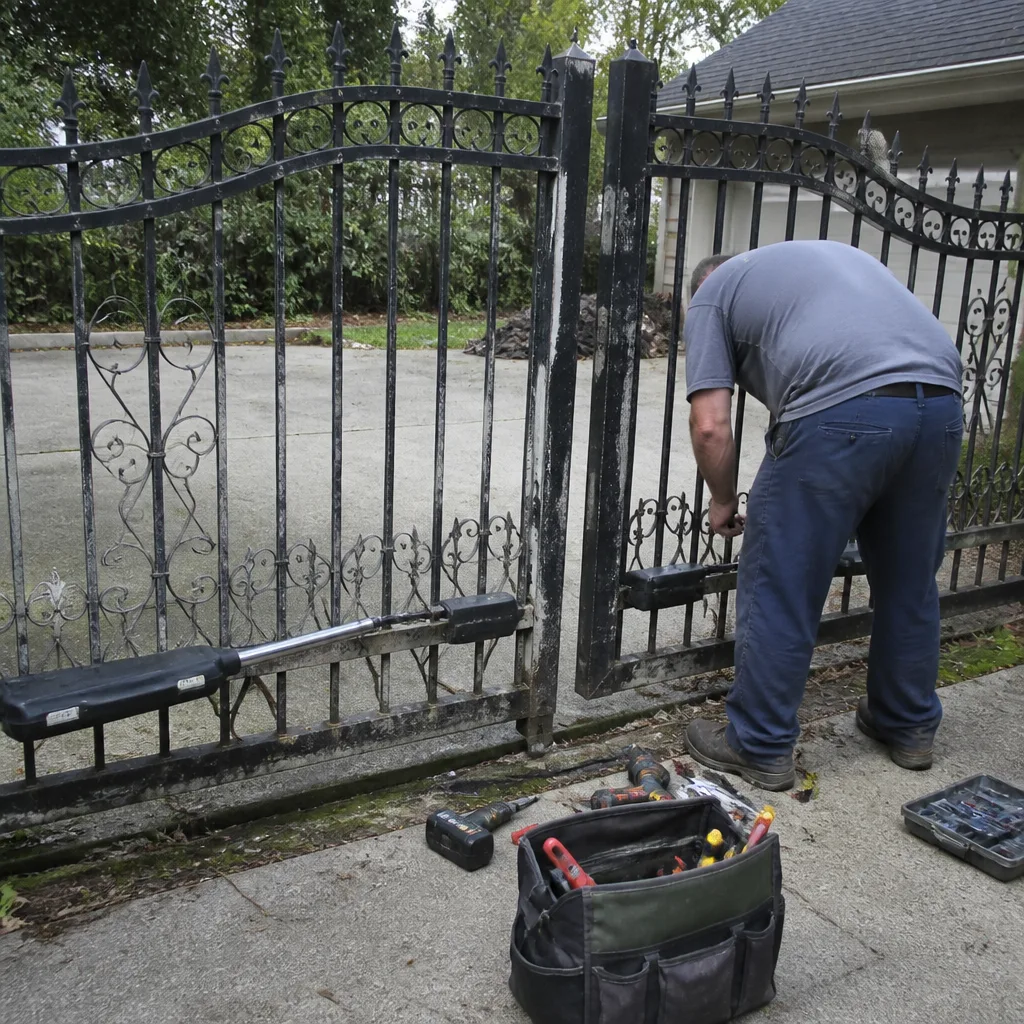 Before
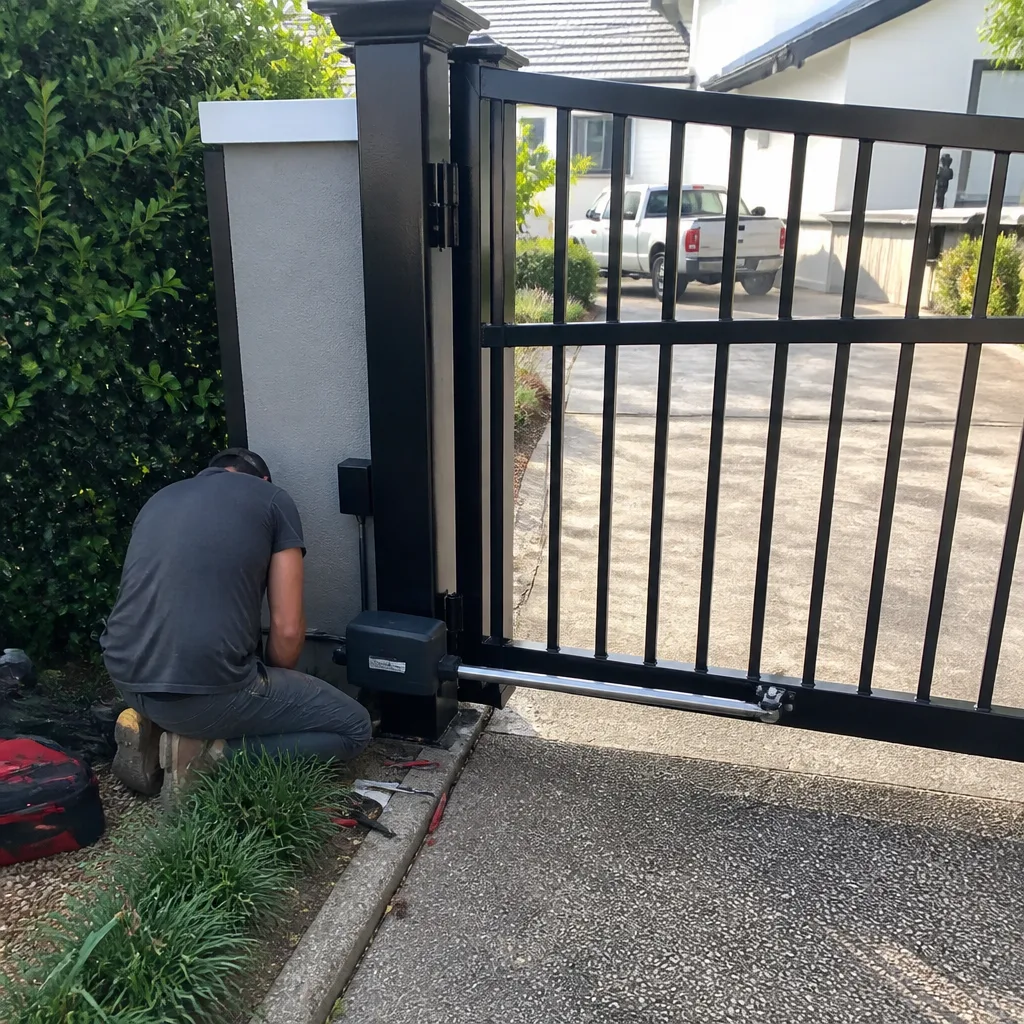 After
After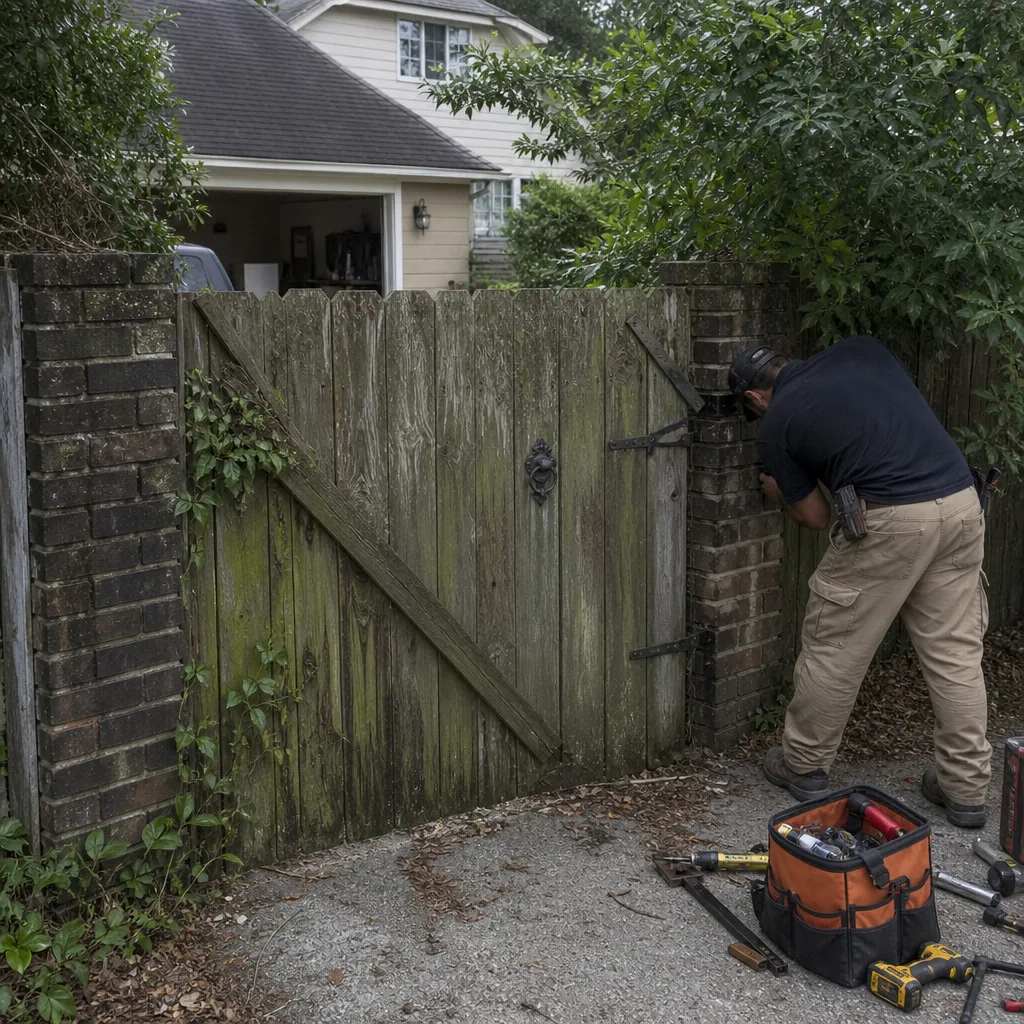 Before
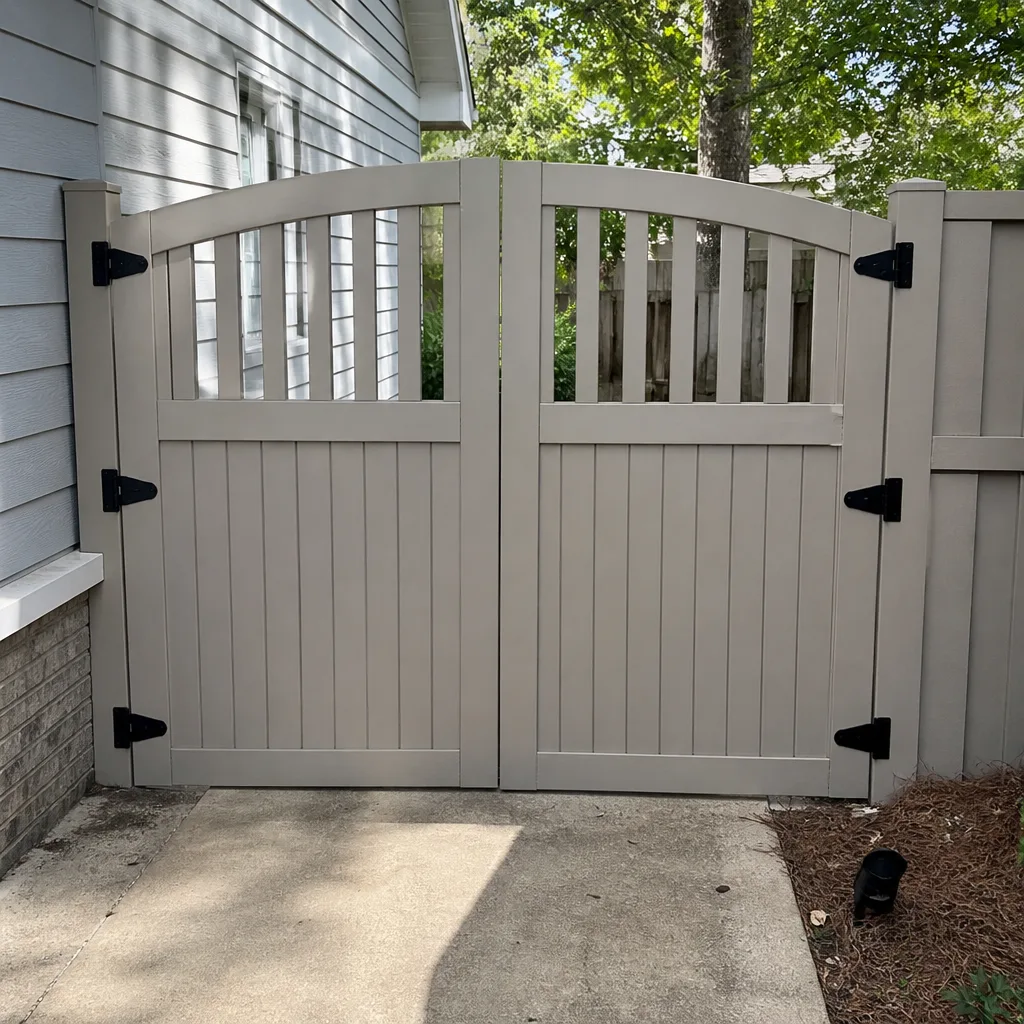 After
After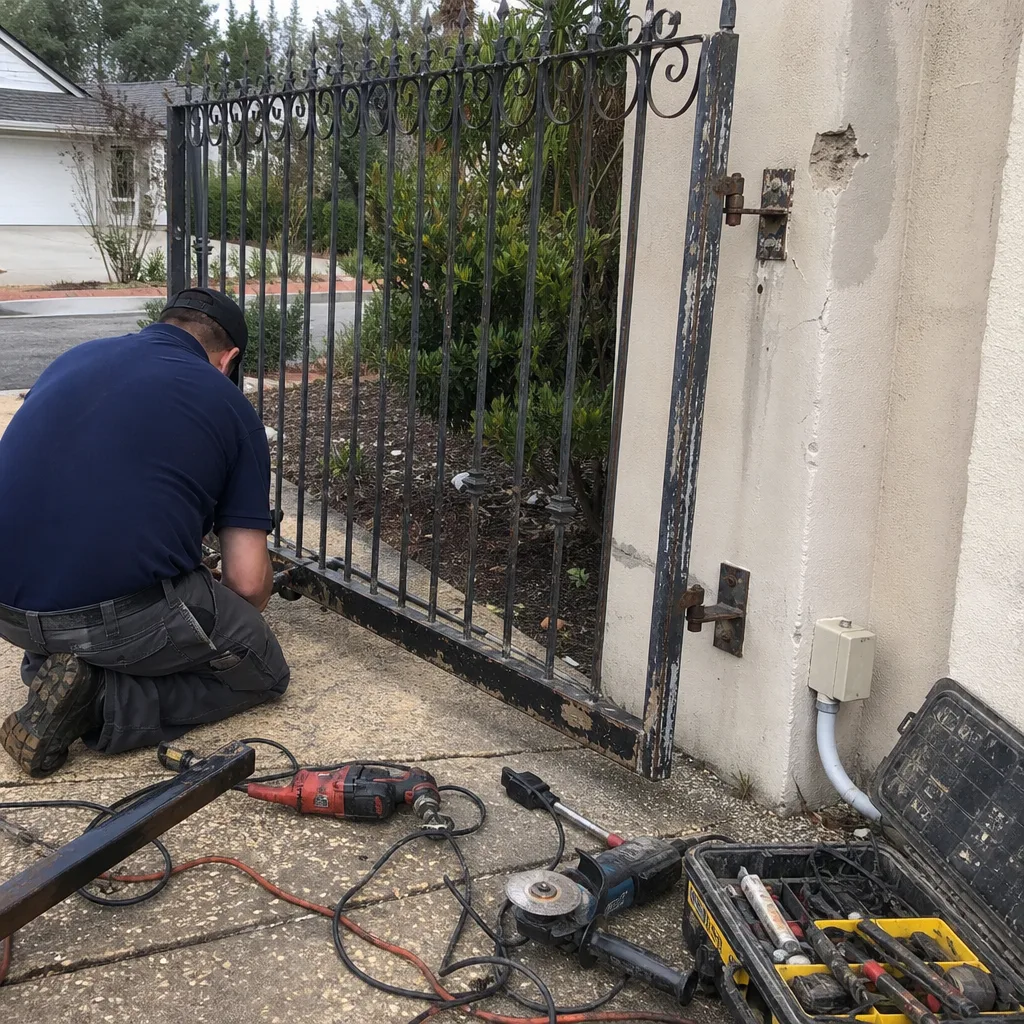 Before
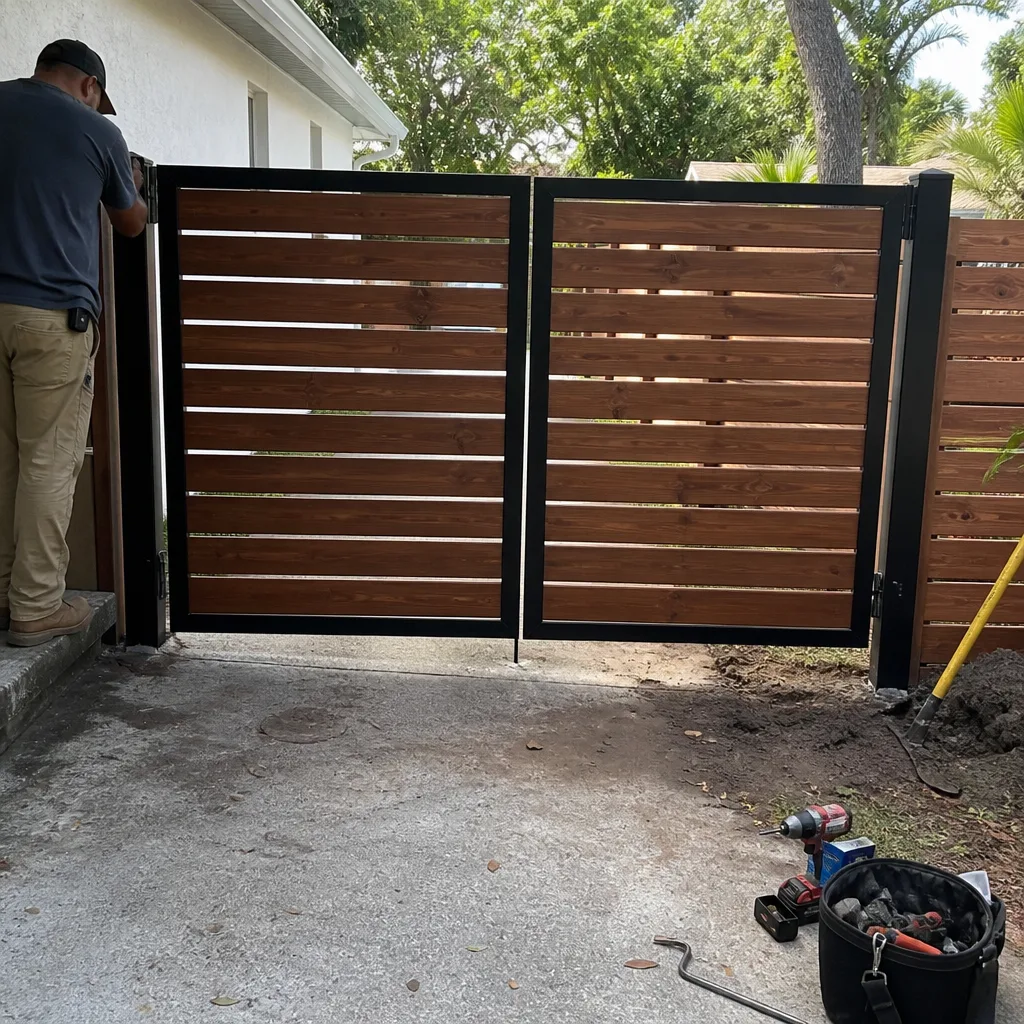 After
After