
Last updated October 17, 2026
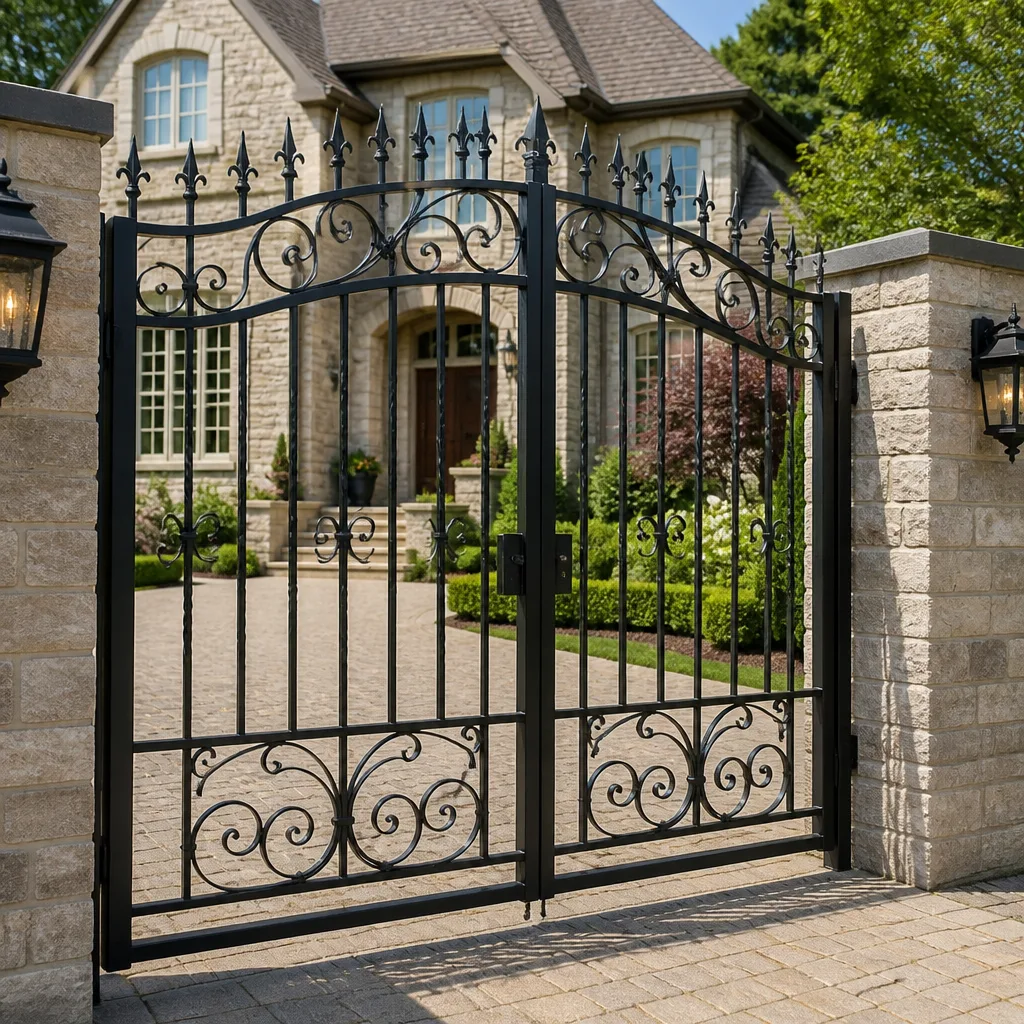 Wrought iron
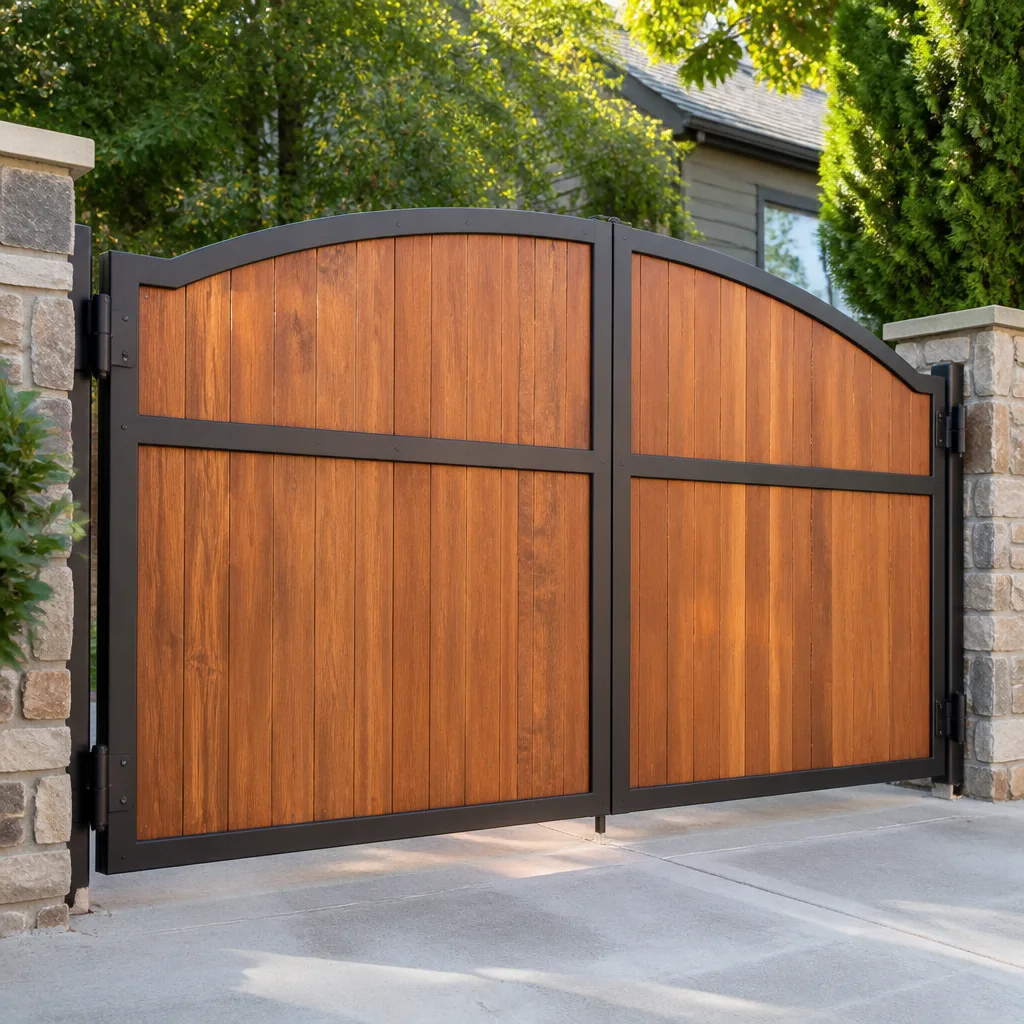 Wood & steel frame
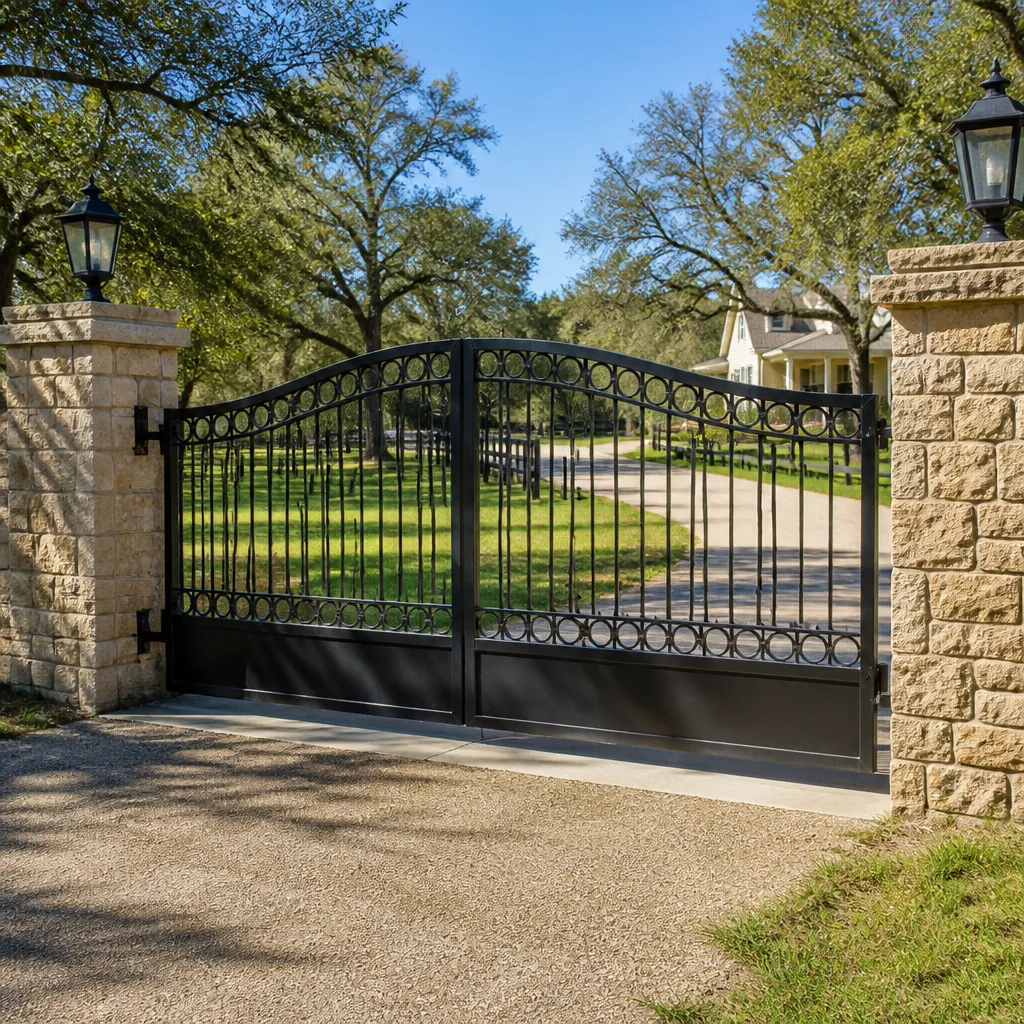 Farm & ranch
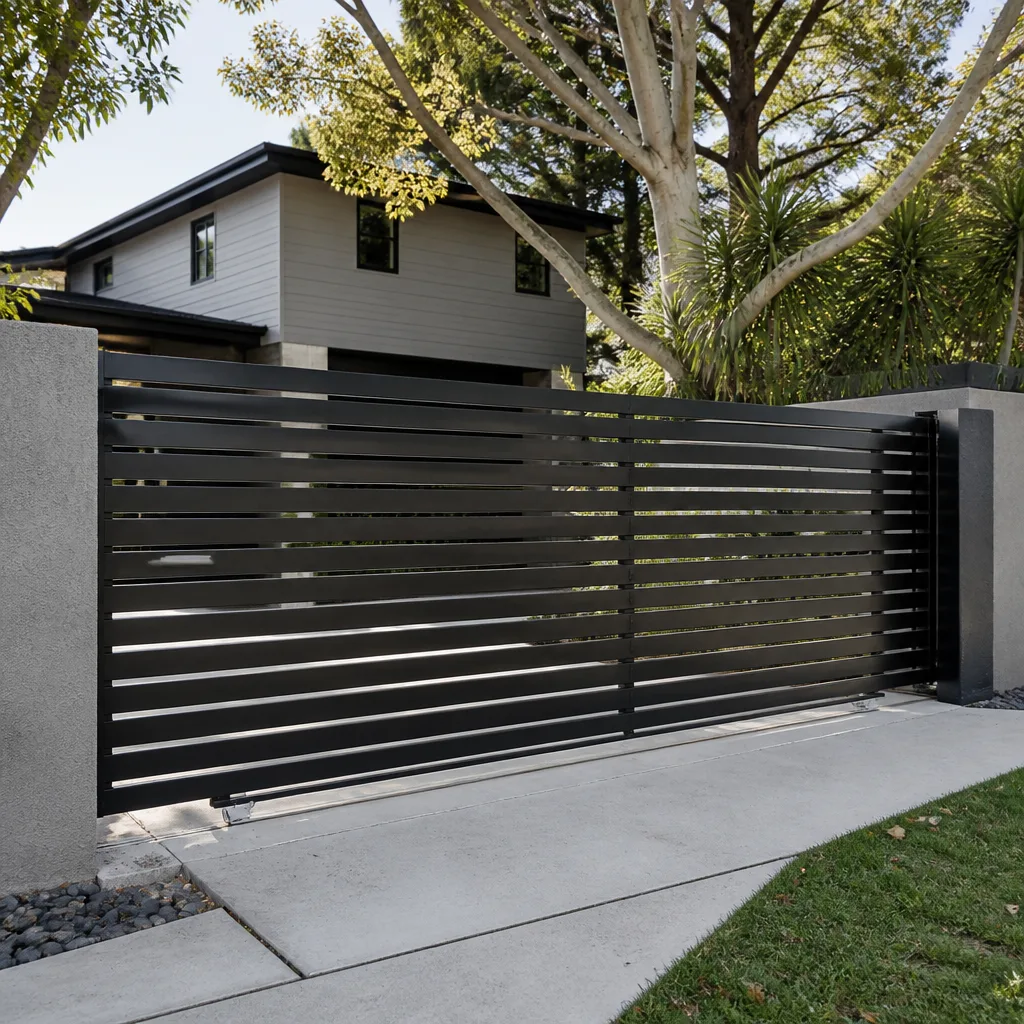 Sliding driveway gates
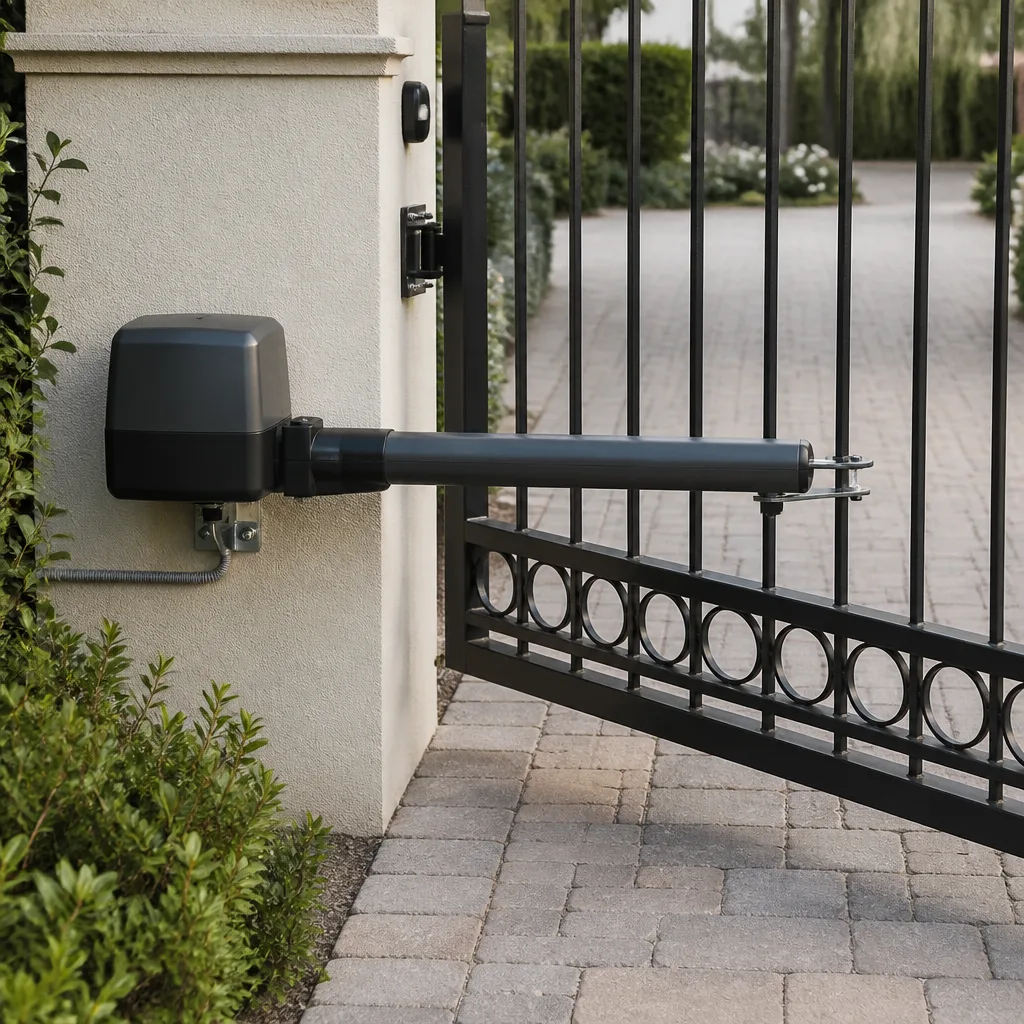 LiftMaster operators
Free on-site gate assessment - hinges, posts, and your LiftMaster or Nice gate operator checked before anything is quoted
The assessment is free and the quote is the invoice.
Get your free estimateSeasonal Gate Repair Care for Jacksonville: Year-Round Homeowner’s Guide
The gate repairs Jacksonville homeowners schedule most often in September aren’t caused by the August storms. They’re caused by skipping the May prep that would have let the gate survive those storms. A $35 hinge re-torque done in late April prevents the same gate from needing a $420 post replacement by October. Our Complete Guide to Gate Repair in Jacksonville walks through the actual seasonal rhythm of Jacksonville, Florida: the humidity arc that runs May through October, the dry stretch from November through March, and the specific gate care tasks that belong in each window. You’ll learn a pre-season checklist, a peak-season maintenance routine, a 10-point post-storm inspection sequence, and the dry-season projects that finally get a clean window to cure properly.
Styles & brands we work with
Quick Answer
Seasonal gate care in Jacksonville works best when split into four windows: pre-season storm prep in April and May, humidity management during the June-to-September peak, a safety-first inspection after any named storm, and dry-season painting, sealing, and track lubrication from November through March. The highest-leverage task of the entire year is tightening hinge bolts and checking operator battery backup before hurricane season starts. Most Jacksonville gate failures trace back to one skipped seasonal task, not a sudden breakdown.
Table of Contents
- Pre-Season: April and May Storm Prep
- Peak Season: June Through September Humidity Management
- Post-Storm: A 10-Point Inspection Ordered by Safety Risk
- Dry Season: November Through March Projects
- How Seasonal Neglect Compounds: The $35-to-$420 Cost Arc
- Seasonal Needs by Gate Type: Wood, Steel, Aluminum, Vinyl
- Common Mistakes to Avoid
- When to Call a Professional
- Frequently Asked Questions
- The Bottom Line
Pre-Season: April and May Storm Prep
Jacksonville’s hurricane season officially starts June 1, but the prep window opens in April, when the ground has firmed up from winter and before the daily afternoon downpours begin. This is the most important maintenance window of the year for gate owners in the Jacksonville area, and most homeowners skip it because the gate still works fine in May. That’s the trap. A gate working in May tells you nothing about how it will handle June’s first tropical system.
Here’s what our team at Latch and Post Gate Repair Jacksonville checks during a Gate Repair service call, and what you can do yourself:
- Hinge torque check. Every hinge bolt on a swing gate should be torqued to the manufacturer’s spec, which for most residential steel gate hinges falls between 40 and 60 foot-pounds. Loose hinges let the gate sag by as little as an eighth of an inch, and by August that sag has become a latch that no longer lines up. We torque every hinge and replace any bolt showing thread wear.
- Operator battery backup test. Electric gates in Jacksonville are required by many HOAs to have battery backup so the gate functions during a power outage. The test is simple: kill power to the operator at the breaker, run the gate three full cycles, and confirm it moves at normal speed. If it slows or stops, the battery needs replacement. Most operator batteries last 3 to 5 years in Florida heat. Brands we service regularly include Ghost Controls and DoorKing, and both publish specific battery-testing procedures for their swing and slide operators.
- Post-cap sealing. Water entering the top of a hollow steel gate post is the single most common cause of post failure we see in Jacksonville. Post caps crack, caulk shrinks, and rainwater seeps in, then sits at the base and rusts from the inside. We remove each cap, inspect the weld seam, apply a fresh bead of exterior-grade sealant, and reseat the cap. This is a $15 fix that prevents a $400-plus post replacement.
- Track clearance on slide gates. A slide gate track that accumulated leaves, sand, and pine needles over winter will bind once summer rain turns that debris into sludge. Clear the full track length, check that the gate rollers are round rather than flat-spotted, and lubricate the track with a dry silicone spray. Avoid grease on the track itself; it catches grit and becomes abrasive by July.
- Latch alignment verification. The latch striker and catch on a swing gate should be within a sixteenth of an inch of dead center. If the gate has shifted even slightly over winter, the latch binds, and someone in the household will eventually force it and bend the latch or the post plate. A 5-minute alignment adjustment in April beats a $120 latch replacement in September.
The full Gate Repair in Jacksonville pre-season service at Latch and Post covers all of this, and you get the written price before we touch anything. For the homeowners who prefer to handle basic items themselves, the hinge torque check and post-cap inspection are the two that most meaningfully reduce storm-season risk.
Peak Season: June Through September Humidity Management
From June through September, Jacksonville’s relative humidity sits above 70% on nearly every morning, and afternoon thunderstorms drop an average of 6 to 7 inches of rain per month during this stretch. That standing humidity does two things to gates: it swells wood, and it accelerates corrosion on steel and iron. Both problems can be managed with monthly attention, and both become expensive when ignored for a full summer.
Wood gates and the binding problem. A wood gate built from treated pine or cedar will swell measurably in Jacksonville’s summer. The vertical stiles and horizontal rails absorb moisture and expand, and a gate that cleared its frame by half an inch in April can start rubbing the latch post by July. The fix is to maintain a minimum clearance gap of 3/8 inch on the latch side and 1/4 inch at the hinge side. That gap prevents binding without creating a security gap wide enough for a hand to reach through and work the latch. If your gate already binds, the fix is trimming the latch edge rather than forcing it, then resealing the fresh cut. We see wood gates in neighborhoods like Ortega and Avondale that get trimmed in early summer and then never sealed, which lets moisture back in and restarts the swelling cycle.
Steel, iron, and aluminum gates in the humidity arc. Steel and wrought-iron gates in Jacksonville rust from two directions: surface rust from ambient moisture and internal rust from post water. Surface rust on powder-coated gates usually starts at a scratch or at a weld joint. A monthly walk-around with a can of touch-up paint matched to the original color stops it before it spreads under the coating. Aluminum gates don’t rust, but the stainless hardware on them can still corrode, especially where two different metals meet. A light coat of marine-grade anti-seize on hinge pins prevents galvanic corrosion, which matters here more than it would a hundred miles inland because of the salt content in Jacksonville’s coastal air.
Electric components in standing humidity. Humidity is the silent enemy of electric gate control boards. Condensation forms inside operator housings as temperatures swing between the 90-degree day and the cooler night, and that moisture corrodes board contacts over time. The practical step is to check that the operator housing’s weep holes are clear and facing down, and that the housing gasket is intact. For homes with Electric Gate Repair in Jacksonville needs during summer, the most common diagnosis we make is a corroded limit switch or a photoelectric sensor lens fogged with condensation. Both are quick fixes when caught early.
A monthly summer checklist, in order:
- Walk the gate through two full open-close cycles and listen for changes in motor pitch or scraping.
- Check the latch bolt extends fully into the catch; a partial engagement will strip under wind load.
- Clear spiderwebs and insects from photoelectric sensor lenses; a blocked beam stops the gate mid-cycle.
- Inspect the bottom track of a slide gate for sand accumulation; Jax yards are sandy, and it builds fast.
- Look for rust starting at hinge welds, latch plates, and any exposed bolt heads; touch up immediately.
Post-Storm: A 10-Point Inspection Ordered by Safety Risk
After any named storm or severe thunderstorm line passes through Jacksonville, inspect the gate in the following order. The sequence is deliberate: each item is checked before the next one, because each one assumes the previous items have been verified safe.
- Post lean. Stand 15 feet back and sight the post against the neighbor’s roofline or another vertical reference. A post leaning even 2 degrees means the gate’s weight has begun to move the structure. Do not operate the gate if you see lean; a leaning post under gate load can shear at the base.
- Hinge welds and bolts. With the gate closed and the opener disengaged, lift the latch end of a swing gate by hand. Movement at the hinge means a loose bolt or a cracked weld. Movement at the post means the post has loosened in its footing.
- Gate frame distortion. Walk to eye level with the top rail and sight across it. A twisted gate frame, common after high-wind events, means the gate now travels on an altered plane and will stress the operator with every cycle.
- Latch alignment. After confirming the structure is sound, check that the latch aligns and engages fully. A misaligned latch after a storm usually means one of the first three items failed, not that the latch itself failed first.
- Operator mounting bolts. Slide gate operators and some swing operators mount to a concrete pad or post with bolts that can loosen under vibration. Check all four mounting points and tighten to spec if any show movement.
- Track and rollers for slide gates. Verify the track has not shifted or become buried in debris. A slide gate that jumps the track mid-cycle is a serious risk and will usually damage the operator gearbox on the way down.
- Battery and backup function. After a storm kills power, some Jacksonville homes are on generator, some are not. Test the battery backup the same way as in pre-season: breaker off, three cycles, confirm normal speed.
- Photoelectric sensors and warning edges. Moisture can short a safety edge and render it inoperable, which means the gate will close on whatever is in its path. Test both sensors and edges with the obstruction test printed in the operator manual.
- Finish damage. Look for scratches, dents, and coating chips from flying debris. Document them, then treat with rust converter and touch-up paint. Unsealed chips in coastal air will show rust within 30 days.
- Landscape debris contact. Check for limbs, vines, or roots now touching the gate or track. A vine wrapping a post up in Middleburg or a live oak root pressing on a track in Riverside is a slow-moving force, but it wins eventually.
This sequence matters because most post-storm gate injuries happen when someone operates a gate whose post has already failed silently. We have responded to Jacksonville calls where the gate still opened and closed, but the post moved three inches at the base with every cycle. The operator lasted two days before tearing its mount out completely.
Dry Season: November Through March Projects
Jacksonville’s dry season, running roughly November through March, delivers the low-humidity, low-rain windows that painting, staining, and sealing projects need to cure properly. Florida humidity fights every coating: paint blushes, stain stays tacky, sealant fails to skin over. From November to March, average humidity sits below 65% most days and rain comes in occasional fronts rather than daily thunderstorms. This is the window.
Wood gates: the full refinish. A wood gate that shows gray, chalky fibers on the surface has lost its protection and will soften through another summer if left untreated. The process: clean the gate with a mild detergent or wood cleaner, allow 24 to 48 dry hours, sand lightly with 120-grit, then apply a quality exterior stain or paint in two thin coats. Morning application works best: the wood is at its driest and the coating has the full day to skin before evening dew arrives. We recommend testing a small section first if switching stain brands or colors, because Jacksonville’s live-oak shade and coastal sun exposure warp drying times block by block.
Steel and iron gates: repaint and rust control. The dry season is the right time to address rust beyond simple touch-up. A wire brush or rust remover takes the surface down to metal, then a rust-inhibiting primer, then a topcoat matched to the existing finish. If the gate is a slide gate with a chain drive, this is also the time to clean and re-lubricate the chain, swap any cracked chain links, and check sprocket wear. A chain that jumps under load in July is often the result of deferred November maintenance.
Automation: the maintenance nobody schedules until it fails. Electric gate operators last longer in Jacksonville when they receive annual attention, and the dry season is the sensible time for it. The work: remove the operator cover, blow out dust and insect debris, check all wire connections are tight, test the capacitor or battery, verify the limit switches function, and lubricate the drive mechanism per the manufacturer’s spec. Elite operators use a worm-gear drive that needs gear oil rather than spray grease; Mighty Mule units have their own lubrication schedule. Using the wrong lubricant on an operator is worse than skipping it, because the wrong product attracts dirt and becomes a grinding compound.
If you have been considering a Gate Installation in Jacksonville, the dry season is also when post footings pour and cure most predictably, and when paint and powder coatings adhere cleanly at the factory or in the field. Concrete set in Jacksonville summer heat without curing compound will crack at the surface; winter pours avoid most of that problem.
How Seasonal Neglect Compounds: The $35-to-$420 Cost Arc
The same gate, the same hinge, the same post. It starts in May and ends in October. Here is the way it plays out when seasonal maintenance is skipped:
| Timing | What’s Happening | Typical Jacksonville Cost |
|---|---|---|
| Late April | Front hinge bolt has loosened one full turn over winter. No visible sag yet. | $35 hinge re-torque (often included in a $49 to $89 seasonal service) |
| June | Gate has sagged 1/8 inch. Latch catches but drags. Household member forces it. | $80 to $140 latch realignment and hinge shim |
| August | Sag now 1/2 inch. Gate drags across the top of the latch post. Opener motor strains at every cycle. Board heat increases. | $180 to $340 operator repair plus hinge replacement |
| October | Gate weight carried by the front hinge alone has worked the post base loose in its footing. Post leans. Gate no longer closes. | $380 to $420 post excavation, reset, and concrete re-pour, plus hinge and latch replacement |
Those dollar figures are representative of Jacksonville’s market for standard residential swing gates. The point of the table isn’t price precision; it’s the slope. The first repair costs less than a dinner out. The last one costs more than a full-year maintenance plan and involves digging, concrete, and a gate that won’t secure the yard for days.
We bring this table out because the math has not changed meaningfully since we opened our Latch and Post Gate Repair Jacksonville home operation in 2009. Seasonal neglect is the single best predictor of expensive gate repair we can name.
Seasonal Needs by Gate Type: Wood, Steel, Aluminum, Vinyl
Wood Gates
Wood gates move more than any other type in Jacksonville because wood absorbs and releases moisture in direct response to humidity swings. A wood gate that clears perfectly in January may bind by July. The seasonal rule: verify the 3/8-inch latch-side gap every month from June through September, and refinish during the dry season. Use stainless or hot-dipped galvanized hardware on wood gates in Jacksonville; plain steel hinges will rust and bleed tannin stains into the wood grain within two summers. Where a choice exists, we choose pet-safe finishes for families with dogs that nose the gate, and we can schedule work around nap time if quiet matters.
Steel and Wrought-Iron Gates
Steel gates hold their dimensions but fight rust year-round in Jacksonville’s humid coastal climate. The seasonal move is a monthly rust scan during the summer peak and a full rust treatment during the dry season. Pay particular attention to the post caps and the bottom rail, the two places water sits longest. A steel gate with intact powder coating and sealed post caps will outlast the house’s first roof; one with a scratched bottom rail will show rust bloom within weeks from May onward.
Aluminum Gates
Aluminum gates are the easiest to live with in Jacksonville. They don’t rust, they don’t swell, and they’re light enough that operator wear is minimal. What fails on aluminum gates is the hardware: stainless steel bolts into aluminum extrusions can gall or seize, especially in the salt air near the beaches. An annual hinge-pin greasing with marine-grade anti-seize and a check of the gate’s weld beads, which are the structural weak point on aluminum, keep these gates running for decades.
Vinyl Gates
Vinyl gates resist both rust and moisture, but they flex more than any other material and they hold heat in a way that can warp panels left in direct Jacksonville sun all afternoon. The seasonal check is for sag at the latch side, which can be adjusted at the hinge post, and for cracks at screw points where hardware penetrates the vinyl. Vinyl gates do not take paint well, so the move is to replace a severely faded or cracked panel rather than attempt a coating fix.
Common Mistakes to Avoid
- Lubricating the slide gate track with grease. Grease on the track catches Jacksonville sand within days and turns into grinding paste. Use a dry silicone spray on the track and rollers, and save grease for the sealed drive components.
- Skipping the post-cap check because “the gate works fine.” Internal post rust produces no visible symptom until the post fails. A cracked post cap is a $15 dollar repair; a rusted-through post is a $400 dollar excavation.
- Forcing a binding wood gate. Every forced squeeze and shoulder push bends the latch assembly and loosens hinge screws. The gate is telling you the humidity has changed its dimensions; the fix is clearance, not force.
- Painting or staining during Jacksonville’s summer humidity. Coatings applied in June-through-September humidity often fail to cure properly, leaving a tacky finish or weak adhesion that peels by December. If you must coat in summer, do it in the early morning on a run of three dry days.
- Ignoring the photoelectric sensor lenses. A gate that reverses mysteriously or stops mid-cycle in Jacksonville summer is usually a sensor lens covered in condensation, spider silk, or lawn debris. Test sensors monthly during peak season.
- Letting vines and limbs contact the gate. Jacksonville landscapes grow aggressively from May onward. Any branch touching a gate is transferring wind load directly into the gate structure every time the wind blows, and vines can work a step-in post loose in a single growing season.
- Running the gate with a known-struggling operator. An operator that strains on every cycle is telling you it’s failing. Every continued cycle makes the repair more expensive and risks a sudden failure that strands the gate open or closed.
When to Call a Professional
Some seasonal tasks are reasonable for a homeowner with basic tools: clearing the track, cleaning sensor lenses, touch-up paint on a small scratch. Others deserve a trained technician, as our DIY vs Professional Gate Repair: The Jacksonville Homeowner’s Decision Guide explains. Call a professional when you see post lean that’s visible from 15 feet away, any crack in a weld joint, a slide gate that has jumped its track, an operator that has begun grinding or straining, or a gate whose latch has stopped engaging entirely. Electrical work on operators means interacting with line voltage in most Jacksonville homes, and the capacitors in gate operators store a charge even after power is cut. Cody Beckman and the Latch and Post Gate Repair Jacksonville team work under the Cedarwell Care Promise: written price before work starts, shoe covers and drop cloths on every visit, and a cleanup photo before departure. Free estimates are available anywhere in Jacksonville at (904) 250-0188.
Frequently Asked Questions
In Jacksonville, a gate should receive light monthly attention during the June-to-September humidity peak and one thorough seasonal service during the April-May pre-season window, followed by dry-season refinishing or automation maintenance between November and March. The monthly routine is visual and takes under 10 minutes; the seasonal service is the one that catches hinge wear, post-cap cracks, and operator battery decline before they become failures.
A seasonal gate service visit in Jacksonville typically runs between $89 and $149 for a standard residential swing gate, which includes hinge torque checks, latch alignment, operator inspection, post-cap sealing, and track or rail lubrication. Larger or double gates and slide gates may run more. Every price is quoted in writing before work begins, so you know the number before anything is touched.
Yes; a gate that binds every summer in Jacksonville is usually a wood gate with insufficient clearance for our humidity swing. The fix is typically trimming the latch edge to restore a 3/8-inch gap and sealing the freshly cut edge, along with checking hinge alignment so the gate hangs square. In some cases the hinges themselves have worn enough to cause the sag, and replacement solves it permanently.
After a hurricane passes through Jacksonville, inspect the gate in this order before operating it: check for post lean, check for hinge weld cracks or loose bolts, check for frame distortion, verify latch alignment, and only then test the opener. If you see any lean or cracking, leave the gate in position and call a professional, because a failing post can shear once the gate cycles under load.
In Jacksonville, paint or stain a gate during the dry season, November through March, when humidity sits below 65% on most days and coatings cure properly. Summer heat and humidity cause paint to blush, stain to remain tacky, and adhesion to suffer. A dry-season refinish typically lasts 3 to 5 years longer in Jacksonville than one applied in July.
Yes. Latch and Post Gate Repair Jacksonville is factory-trained on Ghost Controls, DoorKing, Elite, Mighty Mule, and other major brands, and we perform seasonal maintenance and repair on swing and slide operators across Jacksonville. A live person answers calls 24/7 at (904) 250-0188, and every job gets a written price before work begins.
The Bottom Line
Jacksonville gate care follows a rhythm that most national advice gets backwards. The humidity arc dictates when to inspect, when to adjust, and when to coat. The dry season is for painting, staining, sealing, and automation maintenance. The pre-season weeks of April and May are for storm preparation, and the single highest-value task of the year is a hinge torque check done before June 1. Post-storm inspection always starts with post lean, because that’s the failure that hurts people. Do the monthly checks, use the seasonal windows, and when a repair’s beyond a socket set, call a professional who works under a written price and a promise: Latch and Post Gate Repair Jacksonville at (904) 250-0188. For more guides & resources, visit our blog.
Written by Cody Beckman, Owner at Latch and Post Gate Repair Jacksonville, serving Jacksonville since 2009.
See the difference
 Before
 After
After Before
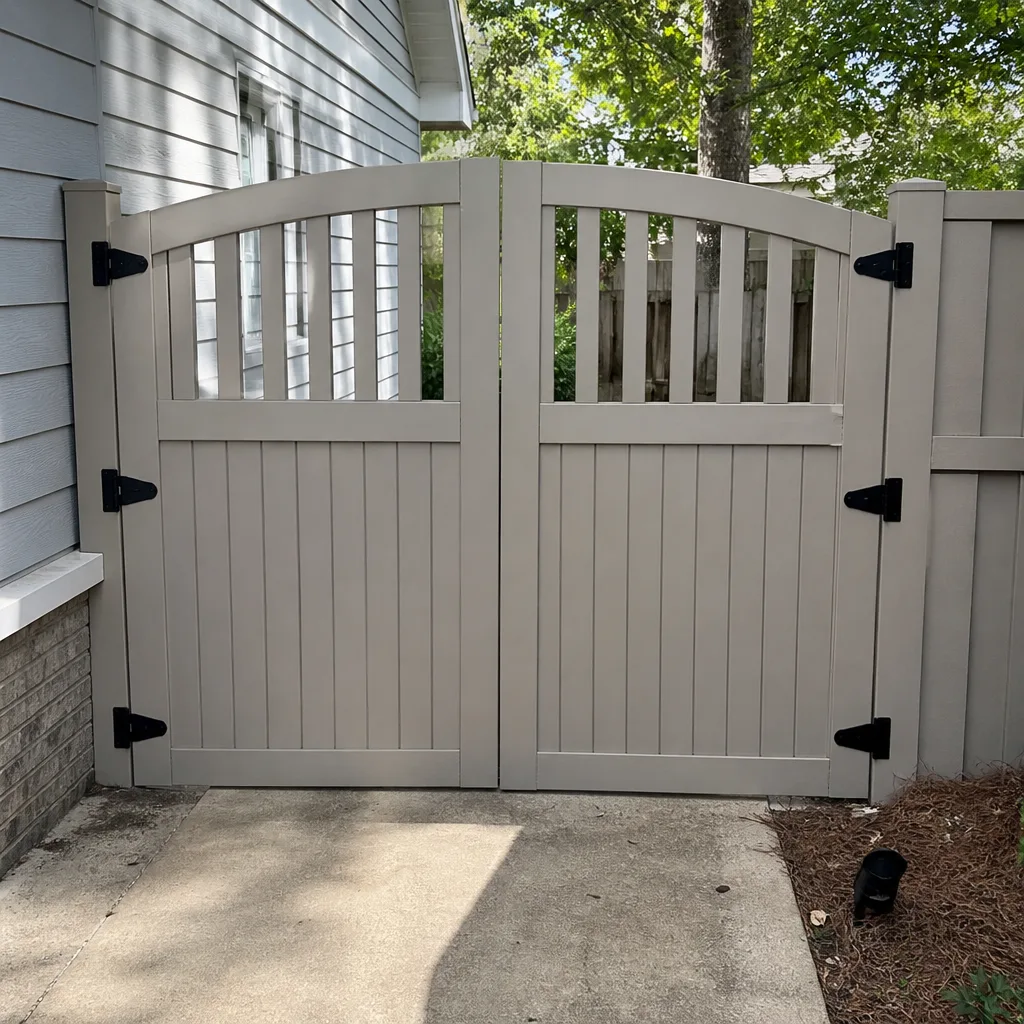 After
After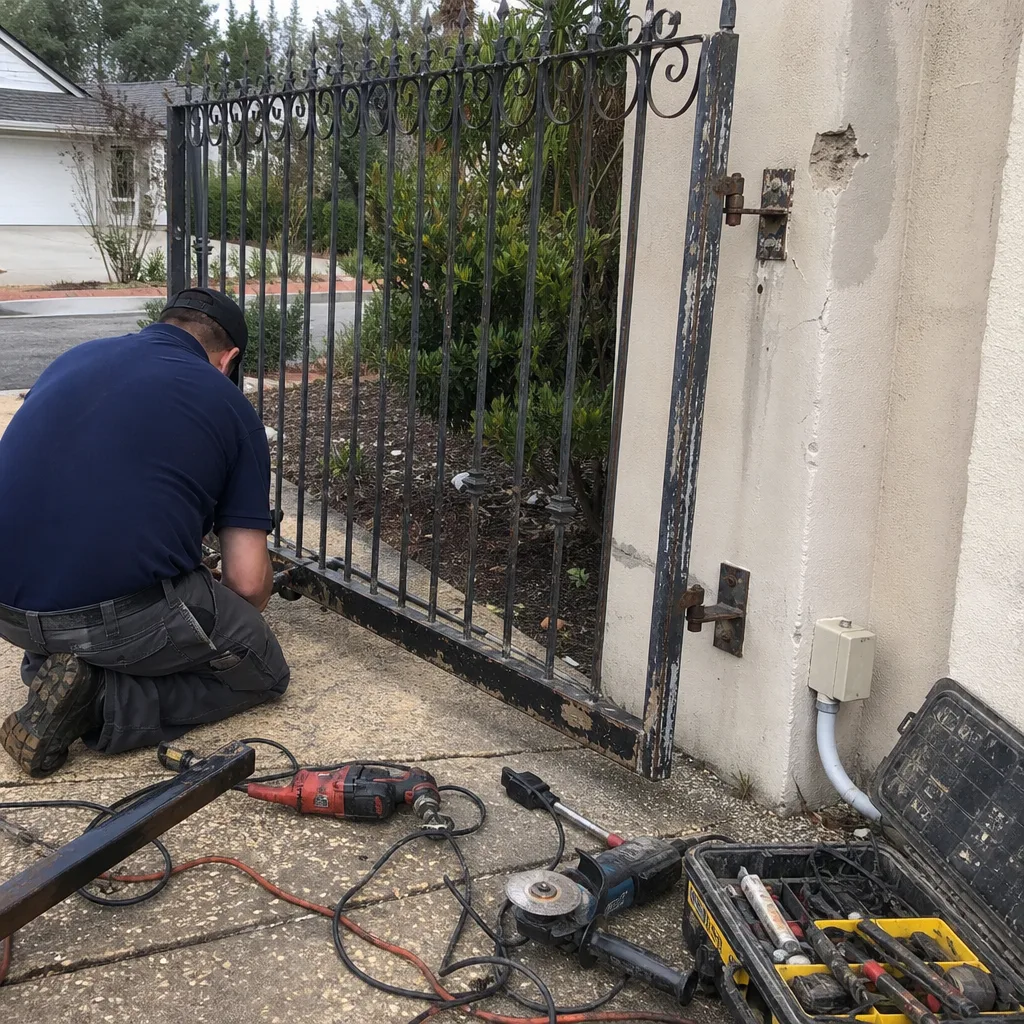 Before
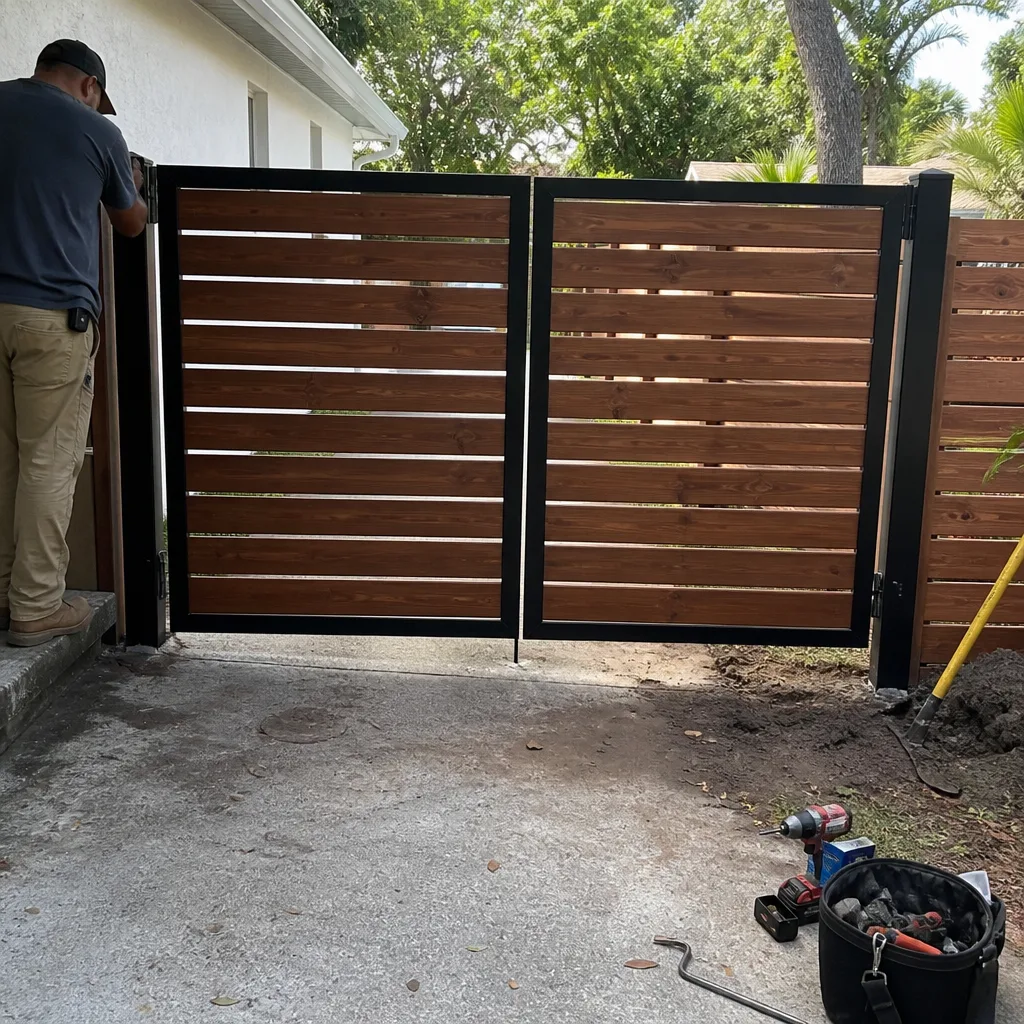 After
After